Datan turvallisuus ja yksityisyys ovat kaiken toimintamme selkäranka.
Ymmärrämme, että tietojesi pitäminen suojattuna on sinulle ensiarvoisen tärkeää. Leadoo AI muuttaa verkkosivuvierailijat asiakkaiksi ja asiakkaat suosittelijoiksi aina korkeimpien tietoturvastandardien mukaisesti. Vaikka järjestelmämme on rakennettu vastaamaan tiukimpia vaatimuksia, kannustamme raportoimaan mahdollisista haavoittuvuuksista suoraan tietoturvajohtajallemme (Head of IT Security) osoitteeseen [email protected].
Miten varmistamme datasi jatkuvan turvallisuuden?
Kehitämme ja ylläpidämme alustaamme jatkuvasti, jotta voimme taata turvallisen ympäristön kaikelle asiakasdatallesi. Alla on esitelty keskeisimmät menetelmät, joilla suojaamme tiedon kaikissa vaiheissa:
Tiedonsiirron salaus
(In-transit encryption)
Kaikki selaimesi ja palvelimiemme välillä liikkuva tieto on suojattu päästä päähän (end-to-end) vahvalla TLS 1.2 -salauksella. Tämä estää ulkopuolisia pääsemästä käsiksi tietovirtoihin tiedonsiirron aikana.
Tallennetun datan salaus
(Encrypted data)
Kaikki meidän ja teidän datamme on aina salattu tallennustasolla. Tämä varmistaa sen, että mahdollisessa pahimman skenaarion tietomurrossakaan hyökkääjä ei pysty hyödyntämään tai lukemaan kryptattua tietoa.
VPN oletusarvona
(VPN by default)
Kaikki yhteydet tuotantoympäristöihimme on suojattu ja suljettu. Niihin pääsee käsiksi ainoastaan suojattujen ja valvottujen VPN-yhteyksien kautta.
Turvalliset upotukset
(Secure bots)
Asiakkaamme voivat upottaa Leadoon Inpage- ja Chatbot-elementit sivuilleen hyödyntäen eristettyä iframe-tagia (sandboxed iframe). Tämä estää tehokkaasti Leadoo-skriptejä pääsemästä suoraan käsiksi asiakkaan verkkosivuston muuhun kriittiseen dataan.
Palomuurit ja DDoS-suojaus
Kaikki datamme on suojattu edistyksellisillä palomuureilla, jotka tunnistavat ja estävät haitallisten bottien hyökkäykset sekä yleisimmät verkkouhat. Ops-tiimimme valvoo palomuurien suorituskykyä jatkuvasti. Lisäksi käytössämme on kattava hajautetun palvelunestohyökkäyksen (DDoS) suojaus, joka torjuu kaikki tunnetut tason 3 (layer 3) ja tason 4 (layer 4) hyökkäykset.
Jatkuva laadunvalvonta ja riskienhallinta
Tietoturva ei ole staattinen tila, vaan jatkuva prosessi. Varmistamme ohjelmistokehityksemme turvallisuuden seuraavilla toimenpiteillä:
Koodikatselmoinnit (Code reviews): Koodikatselmointi on pakollinen vaihe kaikelle uudelle koodille. Jokaisen koodirivin tarkastaa aina vähintään kaksi muuta kehittäjää, mikä minimoi inhimilliset virheet ennen julkaisua
Päivitysten hallinta (Patch management): Seuraamme aktiivisesti tietoturvalistoja varmistaaksemme, että olemme aina ajan tasalla nollapäivähaavoittuvuuksien suhteen ja pidämme kaikki järjestelmäriippuvuudet päivitettyinä
Haavoittuvuuksien arviointi: Ydin- ja johtotiimimme, mukaan lukien CTO, DPO (tietosuojavastaava) ja COO, pitävät kuukausittaisia katselmointitapaamisia, joissa käydään läpi kaikki mahdolliset riskit sekä niiden vaikutukset
Sisäinen koulutus: Ihminen on usein tietoturvaketjun heikoin lenkki. Koulutamme uuden henkilöstömme aina hallitsemaan salasanoja turvallisesti ja edellytämme kaikissa järjestelmissä kaksivaiheista tunnistautumista (2FA)
Tarvitsetko lisätietoja tietoturvasta?
Otamme tietoturvan sen vaatimalla vakavuudella ja ammattitaitoisella otteella. Jos et löytänyt etsimääsi vastausta tai tarvitset yrityksenne omaa tietoturvakyselyä varten tarkempia dokumentteja, ota yhteyttä sähköpostitse [email protected] tai jätä viestiOta yhteyttä -sivumme kautta.
Voit myös tutustua tarkemmin siihen, miten evästeetön ja GDPR-yhteensopiva Leadoo Website Analytics -työkalumme kerää dataa turvallisesti.
Tekoälypohjaiset tuotesuositukset
Esittele oikeat tuotteet oikealla hetkellä.
Vastaamme markkinoiden kysyntään
Personointi ja yksilöllinen kohtaaminen merkitsevät B2C-brändeille nyt enemmän kuin koskaan.
Kun sivustovierailijat löytävät nopeasti heidän budjettiinsa, mieltymyksiinsä ja ostoaikeeseensa tarkalleen vastaavat tuotteet, konvertoinnista tulee huomattavasti helpompaa.
Siksi meillä on ilo esitellä uusi ominaisuus:
Leadoo AI Tuotesuosittelija
Tämä uusi lisäominaisuus yhdistää verkkokauppasi tai tuoteluettelosi suoraan Leadoon työkaluihin, minkä ansiosta voit suositella tuotteita visuaalisesti ja reaaliajassa.
Muuta keskustelut personoiduiksi ostoskokemuksiksi
Product Recommender allows your Leadoo bots to surface relevant products during conversations, exactly whTuotesuosittelija-ominaisuuden (Product Recommender) ansiosta Leadoo-bottisi voivat nostaa esiin osuvia tuotteita suoraan keskustelun aikana. Suositukset esitellään juuri silloin, kun ostajan ostoaikomus on korkeimmillaan.
Sen sijaan, että ohjaisit käyttäjät etsimään tuotteita manuaalisesti, keskustelevat ratkaisusi voivat nyt suositella tuotteita välittömästi sen perusteella, mitä vierailija todella etsii.
Olipa kyseessä tilanne, jossa asiakas:
vertailee eri tuotevaihtoehtoja
etsii tuotteita tietyn budjetin rajoissa
hakee tiettyjä erityisominaisuuksia
tarkistaa saatavuutta tai teknisiä tietoja
Bottisi voivat nyt ohjata heidät visuaalisesti oikeiden tuotteiden pariin juuri oikealla hetkellä.
Yhdistä verkkokauppasi Leadoohon
Kun verkkokauppasi on synkronoitu Leadoon kanssa, Tuotesuosittelija-ominaisuus (Product Recommender) pystyy hakemaan tuotetietoja dynaamisesti suoraan käytyihin keskusteluihin.
Tämän ansiosta bottisi voivat näyttää visuaalisesti keskeisiä tietoja, kuten:
tuotekuvaukset ja suorat linkit (URL-osoitteet)
ajantasaiset hinnat
varastotilanteet
tuotetiedot ja ominaisuudet
Tuloksena on huomattavasti interaktiivisempi, hyödyllisempi ja konversioihin tähtäävä ostopolku. Voit katsoa alta, miten ominaisuus toimii käytännössä erään suuren brittiläisen rakennusalan jälleenmyyjän verkkosivustolla:
Miksi tällä on merkitystä?
🛍 Osuvampia asiakaskokemuksia
Auta sivustovierailijoita löytämään juuri heidän tarpeisiinsa räätälöityjä tuotteita sen sijaan, että tarjoaisit heille kaikille samanlaisen, geneerisen hakukokemuksen.
⚡ Nopeampi polku ostopäätökseen
Vähennä oston esteitä tuomalla oikeat tuotteet tarjolle välittömästi keskustelun sisällä. Tämä korostuu erityisesti silloin, kun asiakas kertoo sinulle suoraan tarpeistaan.
💬 Keskustelevaa kaupankäyntiä, joka todella konvertoi
Mene staattisia chat-kokemuksia pidemmälle ja luo vuorovaikutusta, joka tukee aktiivisesti ostopäätöksiä ja ohjaa asiakkaan suoraan kohti ostopisteitä.
📈 Ostoaikeiden parempi hyödyntäminen
Valjasta käyttäjien keskustelun aikana jakama tieto käyttöön ja tarjoa sen avulla älykkäämpiä tuotesuosituksia reaaliajassa.
Suunniteltu vahvaan ostoaikeeseen
Parhaat suositukset syntyvät silloin, kun asiakkaan ostoaikomus on vahvimmillaan.
Tuotesuosittelija-ominaisuus (Product Recommender) on suunniteltu toimimaan suoraan Leadoon keskustelevien ratkaisujen sisällä siellä, missä käyttäjät jo valmiiksi viettävät aikaa, esittävät kysymyksiä ja etsivät ratkaisuja.
Tämän ansiosta tuotesuositukset tuntuvat ajankohtaisilta, osuvilta ja henkilökohtaisilta ilman, että ne vaikuttaisivat häiritsevältä tuputtamiselta.
Joustava hinnoittelu tuotevalikoimasi koon mukaan
Tuotesuosittelija on saatavilla Leadoon lisäominaisuutena.
Sen hinnoittelu perustuu verkkokaupastasi haettavien tuotteiden määrään, mikä tekee ratkaisusta helposti skaalautuvan erikokoisten verkkokauppojen yksilöllisiin tarpeisiin.
Ota yhteyttä niin kerromme lisää siitä, miten voit ottaa Tuotesuosittelija-ominaisuuden käyttöön omalla Leadoo-tililläsi vaikka jo tänään.
Kannattaako tekoälybotit rakentaa itse talon sisällä?
Tekoälybotit(AI chatbots) ovat nyt saavutettavampia kuin koskaan. Me Leadoolla olemme nähneet loistavia tuloksia tekoälypohjaisten keskustelutyökalujemme sekä sisäisen AI Bot Builder -ominaisuutemme avulla, jonka ansiosta asiakkaamme voivat luoda uusia botteja tyhjästä tekoälyn avustuksella.
Nykyaikaisten kielimallien (LLM), no-code-työkalujen, API-liittymien ja tekoäly-kehitysalustojen ansiosta joidenkin yritysten omat markkinointi- ja kehitystiimit pystyvät nykyään rakentamaan verkkosivubotteja itse.
Onkin täysin ymmärrettävää, että keskustelualustan hankintaa harkitsevat tiimit kysyvät itseltään: ”Pystyisimmekö me rakentamaan tämän itse?”. Kuten tässä artikkelissa osoitamme, todelliset kysymykset kuuluvat kuitenkin näin:
Vaikka pystyisitte rakentamaan sen itse, kannattaako se? Ja mitä se loppujen lopuksi tulee maksamaan?
Vaikka yksinkertaisen tekoälybotin julkaiseminen on helpompaa kuin koskaan, sellaisen botin rakentaminen, joka oikeasti tuottaa tuloksia, skaalautuu, täyttää tietosuojavaatimukset, kehittyy jatkuvasti eikä räjäytä budjettia käsiin, on huomattavasti vaikeampaa kuin useimmat tiimit osaavat odottaa.
Todellisuudessa monet yritykset huomaavat, että piilokustannukset, operatiivinen taakka ja pitkän aikavälin ylläpito haastavat itsetehdyn tekoälybotin kannattavuuden. Se onkin usein paljon vähemmän kannattavaa kuin aluksi kuviteltiin. Ja ne kauhutarinat siitä, kun talon sisällä rakennetut botit epäonnistuvat, voivat tehdä yrityksen maineelle todella pahaa jälkeä.
Botin rakentaminen on se helppo osuus
Useimmat tekoälybottiprojektit alkavat innostuksen vallassa.
Tiimi kokeilee OpenAI:n, Anthropicin tai Geminin rajapintoja. He yhdistävät botin verkkosivustoon, lataavat sinne hieman dokumentaatiota ja saattavat jopa julkaista pilottiversion muutamassa viikossa. Teknisesti ottaen homma toimii.
Mutta sitten kuvaan astuvat ne todelliset kysymykset:
Kuka omistaa tämän pitkällä aikavälillä?
Mistä tiedämme, tuottaako se tuloksia (konversioita)?
Miten estämme bottia antamasta vääriä vastauksia ja asetamme sille turvarajat?
Mitä tapahtuu, kun markkinointitiimi haluaa uusia tai muokattuja keskustelupolkuja?
Miten huolehdimme GDPR-tietosuojasta?
Miksi tekoälykustannukset nousevat yhtäkkiä kuukausi kuukaudelta?
Miksi käyttäjät jättävät keskustelun kesken puolivälissä?
Tämä on se hetki, jolloin monet yritykset heräävät todellisuuteen:
Tekoälybotit eivät ole vain ohjelmistoprojekteja. Ne ovat jatkuvasti käynnissä olevia konversiojärjestelmiä.
Ja menestyksekkäät konversiojärjestelmät vaativat strategiaa, optimointia, analytiikkaa, valvontaa ja jatkuvaa kehitystä.
Kuka siitä vastaa julkaisun jälkeen?
Yksi suurimmista haasteista talon sisäisissä bottiprojekteissa on omistajuus. Julkaisuhetkellä ilmassa on yleensä valtavasti intoa ja eri tiimit tekevät tiiviisti yhteistyötä, onhan kyseessä kuitenkin verkkosivuston uusin ja hienoin työkalu.
Mutta kun julkaisusta on kulunut muutama kuukausi, vastuualueet alkavat usein hämärtyä. Erityisesti silloin, kun edellä mainitut vaikeat kysymykset alkavat nousta pintaan. Ilman selkeää vastuunkantajaa monet tekoälybottiprojektit jämähtävät hiljaisesti paikoilleen.
Botti pysyy kyllä livenä sivustolla, mutta kukaan ei ole todella vastuussa sen kehittämisestä. Tässä kohtaa yritykset usein aliarvioivat konversioihin erikoistuneen kumppanin arvon.
Leadoon kanssa optimointi ei lopu käyttöönottoon. Kaikki asiakkaamme saavat tuekseen omat konversioasiantuntijat(Conversion Experts), joiden tehtävänä on jatkuvasti parantaa botin suorituskykyä, hioa keskustelupolkuja, tunnistaa pullonkauloja ja maksimoida investoinnin tuotto (ROI).
Botti ei nimittäin ole maaliviiva. Se on vasta lähtölaukaus. Voit käydä lukemassa asiakkaidemme kokemuksia palvelumme laadusta ja arvosta arvostelusivustoilta, kuten G2:sta.
Mistä tiedät, että se oikeasti toimii?
Monet yritykset mittaavat tekoälybottien onnistumista väärin tai puutteellisesti. Ne tuijottavat pelkkiä keskustelujen määriä, sitoutumisprosentteja (engagement rate) tai sivustolla vietettyä aikaa.
Yksikään näistä mittareista ei kuitenkaan automaattisesti tarkoita todellisia liiketoimintatuloksia. Todellinen kysymys kuuluukin:
Tuottavatko tekoälybotit konversioita? Ja jos eivät, niin:
Missä kohdassa käyttäjät tippuvat kyydistä?
Mitkä keskustelupolut toimivat parhaiten?
Mitkä kohderyhmät konvertoituvat tehokkaimmin?
Mitkä sivut kaipaavat erilaista tai täysin räätälöityä tekoälykokemusta?
Useimmat itse rakennetut tekoälyratkaisut tarjoavat kyllä teknisen alustan ja logiikan, mutta hyvin vähän syvällistä ymmärrystä konversioista.
Tämä luo helposti tilanteen, jossa tiimit olettavat botin olevan menestys pelkästään siksi, että se on olemassa. Leadoo lähestyy tätä aivan toisesta kulmasta.
Kehittyneen Conversion Insights -analytiikkamme avulla yritykset näkevät selkeästi, miten keskustelupolut vaikuttavat myyntiputken rakentumiseen, liidien laatuun, konversioprosentteihin ja asiakkaiden käyttäytymiseen.
Mikä tärkeintä, optimoinnista tulee jatkuvaa. Ei vain tulipalojen sammuttelua. Tekoäly ilman näkyvyyttä tuloksiin muuttuu nimittäin nopeasti kalliiksi arvailuksi.
Tietoturva ja GDPR: Tekoälyn vaatimustenmukaisuus on monimutkaista
Tietoturvaa ja säädösten noudattamistakohdellaan valitettavasti joskus toissijaisina asioina, kun tekoälyllä vasta kokeillaan. Siis siihen asti, kunnes lakitiimi astuu kuvaan.
Tai kun asiakkaiden henkilötietoja alkaa valua suoraan tekoälylle annettuihin kehotteisiin (prompteihin).
Tekoälybotit käsittelevät usein henkilötietoja, ja monet yritykset aliarvioivat sen operatiivisen monimutkaisuuden, mitä tämän datan hallinta turvallisesti ja sääntöjen mukaisesti vaatii.
Tässä on lista avainkysymyksistä, joihin jokaisen tekoälybotin rakentajan tai palveluntarjoajan ON pystyttävä vastaamaan:
Nämä huolet kasvavat entisestään, jos yritys toimii useilla eri alueilla tai eri maiden lainsäädäntöjen alaisuudessa. Talon sisäiset tiimit päätyvätkin usein epävarmalle juridiselle miinakentälle yrittäessään ratkoa näitä kysymyksiä yksin. Leadoon alusta on rakennettu alusta alkaen GDPR-yhteensopivaksi ja siinä on huomioitu suuryritystason tietohallinto. Tämä minimoi riskit ja antaa yrityksille mahdollisuuden skaalata keskusteluratkaisujaan luottavaisin mielin. Tietoturva ja säädösten noudattaminen eivät nimittäin ole asioita, jotka voi vain liimata päälle jälkikäteen.
Käyttäjäkokemus ratkaisee: Pelkkä tekoälylogiikka ei riitä
Tämä on yksi yleisimmistä sudenkuopista tekoälybottien kehityksessä. Useimmat tekoälytyökalut tarjoavat kyllä älykkyyden (intelligence layer).
Ne eivät kuitenkaan ratkaise itse käyttäjäkokemusta (experience layer) ja käyttäjäkokemus on juuri se, minkä kanssa ihmiset todellisuudessa ovat tekemisissä. Siihen kuuluvat muun muassa visuaalinen ilme ja keskustelumuotoilu (conversational design), ajoitukset ja herätteet (triggers), toimivuus mobiililaitteilla, brändin mukaisuus, suojaraamit ja virhetilanteiden hallinta sekä polut oikean ihmisen työpöydälle siirtymiseen.
Käytännössä yritykset käyttävät usein huomattavasti enemmän aikaa käyttäjäkokemuksen suunnitteluun ja hienosäätöön kuin itse tekoälyn rakentamiseen. Ilman huolellista optimointia tekoälyboteista tulee helposti epäjohdonmukaisia, ne eivät tunnu omalta brändiltä tai ne ovat vain tylsiä ja geneerisiä (kuten kuuluisa Air Canadan tapaus osoitti).
Mikä pahinta, huonosti toteutetut tai optimoimattomat tekoälykokemukset voivat aktiivisesti heikentää konversioprosentteja ja murentaa asiakkaiden luottamusta.
Leadoo AI yhdistää älykkään keskusteluteknologian konversio-optimoituun käyttäjäkokemukseen ja valmiisiin suojaraameihin. Konversioasiantuntijoidemme avulla autamme yrityksiä ottamaan käyttöön tekoälyratkaisuja, jotka eivät ole vain älykkäitä, vaan myös kaupallisesti tehokkaita.
Käyttäjät eivät nimittäin arvioi bottiasi sen teknisen arkkitehtuurin perusteella. He arvioivat sitä kokemuksen perusteella. Tässä on esimerkki siitä, miten Leadoo AI voi parantaa käyttäjäkokemusta merkittävästi, jopa erittäin säännellyllä toimialalla.
Kustannukset ja skaalautuvuus: Tee-se-itse-tekoälyn piilotettu talous
Monet yritykset lähtevät rakentamaan tekoälybotteja itse, koska ne olettavat sen säästävän kustannuksia.
Aluksi tämä saattaakin näyttää todelta. Ensimmäisen prototyypin luomiseen tarvitaan usein vain yksi kehittäjä ja pääsy tekoälyn rajapintaan (API).
Kustannukset jäävät kuitenkin harvoin sille tasolle. Kun botin käyttö laajenee, myös monimutkaisuus kasvaa. Ennen pitkää organisaatio ei enää pyöritä pelkkää ”yhtä bottia”, se pyörittää jatkuvasti kehittyvää tekoälyalustaa.
Toisin kuin Leadoon kiinteä ja ennakoitava pakettihinnoittelu, yrityksen sisäiset tekoälyinfrakustannukset voivat heitellä rajusti. Niihin vaikuttavat muun muassa tekoälymallien päivitykset, käsiteltyjen tietomäärien mukainen hinnoittelu sekä kasvavat laskentatehon vaatimukset.
Sisäiset tiimit joutuvat myös kantamaan yllättävät operatiiviset kulut, jotka liittyvät ylläpitoon, tekoälykehotteiden hienosäätöön (prompt tuning), analytiikkaintegraatioihin ja asennuksiin, laadunvarmistukseen (QA) sekä infrastruktuurin valvontaan.
Se, mikä aluksi näytti halvemmalta vaihtoehdolta, voikin muuttua nopeasti huomattavasti kalliimmaksi.
Integraatiohaaste, josta kukaan ei puhu
Tekoälybotit toimivat harvoin irrallaan muista järjestelmistä. Jotta ne toisivat todellista liiketoimintahyötyä, niiden on oltava yhteydessä CRM- ja markkinoinnin automaatiojärjestelmiin (MA), analytiikkatyökaluihin tai tuotetietokantoihin.
Jokainen integraatio tuo mukanaan lisää monimutkaisuutta, ylläpitotarvetta ja mahdollisia virhepisteitä. Kun jokin menee rikki, sen selvittäminen, onko vika itse tekoälyssä vai järjestelmien välisissä liitoksissa, voi viedä sisäisiltä tiimeiltä valtavasti aikaa ja herättää uudelleen henkiin aiemmin mainitsemamme keskustelun siitä, kuka järjestelmästä loppujen lopuksi vastaa.
Tämä on jälleen yksi syy siihen, miksi useimmat yritykset päätyvät lopulta valitsemaan valmiiksi hallinnoidun keskustelualustan sirpaleisten tee-se-itse-ratkaisujen sijaan.
Nopeus on tärkeää, mutta jatkuvuus ratkaisee
On sanomattakin selvää, että nykyiset tekoälytyökalut ovat tehneet bottien kehittämisestä helpompaa ja saavutettavampaa kuin koskaan. Yritykset pystyvät aivan varmasti rakentamaan vaikuttavia tekoälykokemuksia omin voimin.
Paljon tärkeämpää on kuitenkin pohtia, kannattaako sisäisiä resursseja sitoa pitkäksi aikaa näiden järjestelmien hallintaan, optimointiin, tietoturvasta huolehtimiseen, skaalaamiseen ja jatkuvaan kehittämiseen.
Menestyvät tekoälybotit eivät nimittäin ole kertaprojekteja. Ne ovat jatkuvasti käynnissä olevia, kaupallisia kokonaisuuksia. Ja kuten olemme huomanneet, jos asiat menevät pieleen, seuraukset voivat olla sisäisille tiimeille raskaat.
Monelle yritykselle suurin haaste ei olekaan tekoälybotin julkaiseminen. Se on sen onnistunut ja tuloksellinen ylläpito pitkällä aikavälillä.
Juuri siinä Leadoo AI ja meidän konversioasiantuntijamme loistavat.
Leadoo Academy Certification
Conversion Rate Fundamentals
This certification is for marketing and sales professionals who want to show the value of their work and exceed their goals. Get ready to master conversion fundamentals and turn your website into a sales engine.
https://youtu.be/3h7rfij5p3Y
video: ”A word from your coach”
Hi there, I’m X from Leadoo Marketing Technologies. I will be your coach during this conversion rate fundamentals certification.
Can I just say that I’m so excited to have you here! It means that you’re not afraid to dig into the results of your marketing activities and learn to become even better at your craft.
Completing this certification will give you the answer to questions like: What are conversions, conversion rate and CRO, Why are these important, How to measure conversion results, How to get more conversions from your web traffic, and more..
This certification consists of 5 parts and 2 quizzes. To pass, you will need to score 80% or more in the final assessment
After passing the final test, you will get a badge that shows your network that you know your stuff when it comes to conversion focused marketing.
Wear the badge with pride – you can easily add the achievement to your LinkedIn profile.
I hope you’ll discover lots of useful ideas and tools for improving your conversion results starting today. Good luck!
Completion time: 3-4 hours
5 parts, 2 quizzes, 1 final test
Get a badge on your profile
Content outline
Part 1
Introduction to conversions and conversion rate
Definitions
Conversion is the end goal of your marketing activities and campaigns that drive traffic to your website. A conversion is in essence an action taken by a website visitor. Conversions come in many forms, but they are always linked to a business goal.
Conversion rate is a metric that tells the percentage of website or landing page visitors that completed a conversion. The generic formula for calculating conversion rate is: #conversions / #visitors * 100%.
CRO or conversion rate optimization is the practice of improving a conversion rate. CRO is a continuous effort of experimenting with and finding ways to improve a website or landing page’s ability to convert visitors into leads and customers.
https://youtu.be/3N_vfQIqlnA
video: ”Conversions, conversion rate and CRO in a nutshell”
For years, marketers thought that the best way to get results from a website is to drive more traffic to the site.
It’s about time to accept that focusing on conversions – rather than traffic – is by far the most powerful and cost-effective way to generate leads and sales from the website.
Tiny improvements in conversion rate can turn into massive incremental revenue. And the best thing about it? That revenue comes from the traffic and demand you already have.
Simply put, a conversion is an action taken by a website visitor that is linked to one or more business goals.
Conversion rate is a metric that tells the percentage of website or landing page visitors that completed a conversion.
Conversion rate optimization or CRO is the practice of improving conversion rates by methods of experimentation.
Conversion is the end goal of marketing activities and campaigns, and ultimately, conversions tell how successful or unsuccessful your marketing efforts really are.
Without clear visibility to conversions, marketing will be largely based on hunches about what works and what doesn’t. That is obviously not the optimal way to do marketing.
The role of conversions in marketing and business
Conversions tell you (concretely) how well your marketing is performing. Each marketing activity or campaign should have an end goal, for example generating demand and capturing it as demo requests. Therefore, conversions are one critical metric to determine your campaigns’ success.
You should also consider the importance of conversions in a broader sense.
Before people in your audience convert, they are unidentified and cannot be linked to any specific information, interest or other traits. The point of conversion changes the relationship between you and the person. As they walk through the conversion gate, you are often rewarded with their contact information and/or other valuable insights.
Conversions give you information about buyers and help you to move the potential customer forward on the buyer’s journey. Especially when treated as leads, converted people feed the work of sales, securing your future pipeline and revenue.
To put it short and sweet: conversions are good and you want more of them.
Reasons to care about conversion rate
Conversion rate matters because it largely defines the success of your marketing activities. With a low conversion rate, much of the effort you put into campaigns will go to waste.
If you don’t know your conversion rate, your marketing will be based on hunches about what works and what doesn’t. And that.. Well, it obviously isn’t the optimal way to do marketing.
https://youtu.be/YTv81og0bhk
video: ”Why conversion rate matters”
So, conversions define a big part of the success of your marketing activities.
With a low conversion rate, much of the effort you put into campaigns will go to waste. You may get a lot of people on your website, but most of them will not take the next step towards becoming a customer or building a relationship with your business.
But what if you could find a way to improve the conversion rate?
When conversion rate is on a good level, it will make more sense to drive traffic to the website. You will be better equipped to capture existing demand and turn it into sales and revenue.
The beauty of conversion rate and CRO is, that the starting point doesn’t matter. A conversion focus helps you to squeeze more results from the traffic and interest that’s already there.
Even better, conversion rate improvements increase the effectiveness of current and future campaigns.
These reasons should be enough to make you wanna rethink how you prioritize web traffic and conversions.
Improvements in conversion rate increase results from all of your marketing activities. There are two ways to consider conversions and how to get more of them. You can either:
• Drive more traffic to your website, and at some point you should see more conversions
• Focus on improving the website’s conversion performance for existing traffic, and increase results for current and future campaigsn
The first option is simple. You can always pour more money into ads and get more traffic. But this is expensive and doesn’t guarantee results. Much of your effort will still go to waste, and you haven’t done anything to learn more about your customers or to provide a better experience.
The second option has obvious pros. With a better conversion rate, it makes more sense to drive traffic to the site. The beauty of conversion rate optimization (CRO) is that the starting point doesn’t really matter – you’re squeezing out better results from the traffic and interest that already exists.
Key takeaways
A conversion is an action taken by a website visitor that is linked to a business outcome or goal
Conversions fuel marketing, sales and growth
Conversion rate measures the effectiveness of a website – it is a much more concrete and valuable metric compared to web traffic
Improvements to conversion rate increase the effectiveness of all marketing activities and campaigns
So, conversions are actions that people (potential and existing customers) take on your website. From the list below, you can see that some conversions are directly linked to revenue, whereas others are further up the funnel.
In both cases, the purpose of a conversion is to nudge the person closer to becoming a customer, or to strengthen the relationship between them and your business.
Here’s a list of common conversion types:
Request for quotation
Contact request
Demo request
Purchase and order
Content download
Form submission
Newsletter subscription
Event and webinar sign up
CTA click
Call and email
Not all prospects are equally ready to buy. That’s why it makes sense to provide multiple conversion types that require a different level of commitment.
Whilst conversions are often only considered part of marketing and sales, they are equally important in terms of recruitment and customer service.
When hiring, you need to convert job candidates much like you would MQLs or SQLs. In this case, conversion means a sent application or other indication that the candidate is interested in joining your team.
In customer service, conversions can be thought of as incoming requests and resolved issues. It may seem far-fetched to call these conversions, but think of it this way: if your customer has an issue and is unable to reach you via the website, it’s unlikely that they will keep being a customer for very long.
https://youtu.be/c7EUVPaP188
video: ”Common conversion types and when to use them”
A conversion is in a way what you make it.
Different conversion types are used for activating prospects and customers in different stages of the buyer’s journey.
As a recap, the buyer’s journey consists of 3 stages: Awareness, Consideration, and Decision. From the traditional marketing funnel perspective, these stages roughly represent top of the funnel, middle of the funnel, and bottom of the funnel, respectively.
The website visitors’ readiness to buy differs by funnel stage. Some are more educated and prepared to make a decision than others.
By providing different conversion opportunities, a business can capture more of the interest that exists on different levels.
Commonly used conversion types include contact and quotation request, purchase and order, content download, newsletter subscription, chatbot conversation and form submission, event sign up, CTA click and so on.
The key to selecting and using different conversion types is to know what drives your target audience, and how they progress in the buyer’s journey.
Regarding marketing and sales conversions, different conversion types can be mapped onto the buyer’s journey funnel.
Roughly speaking, the buyer’s journey consists of three stages:
Awareness
Consideration
Decision
As prospects and customers move through these stages, their commitment level increases and that is reflected in the types of conversions that are likely to occur.
Looking at conversion types from the funnel perspective provides an idea of what activations work for customers in different stages. In reality, buyer’s journeys are rarely exactly direct. This means that a customer may revisit earlier stages and therefore someone already in the decision stage may complete a more top of the funnel conversion.
Top of the funnel conversions
https://youtu.be/l4jzEkL_1-A
video: ”What are top of the funnel conversions”
What is meant by top of the funnel (awareness stage)
conversion type examples
the purpose of these conversions
Typical top of the funnel (awareness stage) conversions include:
Landing page visit
Click on a CTA
Webinar sign up
Content download
Newsletter subscription
Awareness stage conversions capture the interest that is forming towards an idea or a solution. These conversions are important in that they ”pull” new people into the funnel.
Top of the funnel conversions can provide valuable signals about latent interest, and may help identify future opportunities. However, it would be unwise to approach people in the awareness stage with a heavy sales focus, as most of them are not ready to buy.
Middle of the funnel conversions
https://youtu.be/B-4_nPt6-ZI
video: ”What are middle of the funnel conversions”
What is meant by middle of the funnel (consideration stage)
conversion type examples
the purpose of these conversions
Typical middle of the funnel (consideration stage) conversions include:
Newsletter subscription
Content download
Contact request
Chatbot conversation
Form submission
Demo request
Email or call
Middle of the funnel conversions are the most versatile bunch, and drawing a line between the stages here is practically impossible.
At this stage, people in the funnel are more aware of their problem and potential solutions to it. Conversions signal that the potential buyer considers the particular vendor or solution as an alternative.
This stage involves higher commitment, as most of the conversion types include sending over personal contact information and other details.
Bottom of the funnel conversions
https://youtu.be/yp_fW9kG3xY
video: ”What are bottom of the funnel conversions”
What is meant by bottom of the funnel (decision stage)
conversion type examples
the purpose of these conversions
Typical bottom of the funnel (decision stage) conversions include:
Demo request
Email or call
Calendar booking
Request for quotation
Purchase or order
Decision stage conversions are what you should ultimately aim for. Awareness and consideration drive people to the bottom of the funnel, where they have a decision to make: Do I want to do business with this company or not?
Bottom of the funnel conversions capture strong purchase intent and actual transactions. In all cases, they are closely linked to results and revenue.
Key takeaways
At all times, your audience includes people in different stages of the buyer’s journey. In other words, their readiness to buy varies.
By providing alternative ways to convert, you can make sure that people in all three stages have natural and appealing opportunities to move forward.
You should match your follow-up and sales approach with the specific buyer’s journey stage as accurately as possible.
Some conversion types may be triggered by prospects in more than one buyer’s journey stage.
There’s no point in doing conversion rate optimization, unless you’re able to measure the results. The need to track conversion performance should be a no-brainer. It’s the only way to know whether what you’re doing is bringing in any value.
In this part, you’ll be introduced to a set of useful conversion KPIs and learn how to work with them.
Conversion KPIs – What you can and should measure
https://youtu.be/xfocaBoEJZI
video: ”Introduction to conversion KPIs”
Conversions are a classic case of ”If you can’t measure it, you can’t improve it.”
It really pays off to keep track of your conversion results. That’s the only way you’ll know whether your marketing efforts bring concrete results, and how you’re able to improve your game over time.
There are a number of conversion-related KPIs that inform you about how your campaigns and projects are translating into numbers, and ultimately, revenue.
Depending on your operations, resources and available data, you want to choose the most relevant KPIs to track.
In our experience, the most useful conversion KPIs include the following
Total number of conversions: This says a lot about your marketing performance. With several conversion types, it makes sense to track the number by conversion type.
Conversion rate: This tells you how many of your website visitors you’re able to nudge forward on their buyer’s journey.
Cost-per-acquisition or CPA: In this context, CPA practically means cost per conversion – how much are you paying for each conversion or lead.
Conversion value: the opposite of CPA – what is a conversion worth to your business.
ROI and ROAS: CPA and conversion value put together provide an estimate of return-on-investment or return-on-ad-spend. This KPI says whether you should continue doing something or cut it.
Sales funnel metrics: KPIs like average deal/purchase value and lead-to-customer rate help you estimate marketing results more accurately.
Revenue: the end goal of your conversion efforts is to generate revenue. Measuring the bottom-line impact is extremely important when you want to show the value of marketing.
You don’t need to know all of these KPIs by heart. Start by figuring out your current level on the most relevant KPIs, and use it as a benchmark for future.
Total number of conversions
The number of conversions is your most basic conversion KPI. Especially if you’re only collecting one or two conversion types, tracking this number alone will say a lot about your performance.
By knowing how many conversions you were able to capture in a week or a month, it’s easy to reflect the performance with your marketing activities from that period.
Perhaps that increase in PPC ad spend brought you significantly more conversions? Or maybe it was your new landing page design?
If you’re collecting several different conversion types (for example: quotation requests, demo bookings, event sign ups and newsletter subscriptions) it makes sense to track the number of conversions by type.
Tracking conversions by type helps you see what areas in your marketing need more attention.
PRO TIP
Tracking conversions by type helps you see what areas in your marketing need more attention.
Conversion rate
Conversion rate is the percentage of website visitors who completed a conversion. In all simplicity, you calculate conversion rate by dividing the number of conversions with the number of visitors.
Conversion rate = #CONVERSIONS / #VISITORS * 100%
video: ”Conversion rate explained”
(similar video can be done for other KPIs, too)
This central KPI measures the performance of your campaigns and landing pages. You can calculate conversion rate for an entire domain or selected pages. For more detailed insights, you can analyze conversion rates for specific channels or campaigns.
We’ve listed some recent conversion rate benchmarks in this article.
PRO TIP
For more detailed insights, you can analyze conversion rate for a specific channel or campaign.
Cost per acquisition (CPA)
Another important conversion KPI is CPA, or cost per acquisition. In this context, CPA essentially means cost per conversion. That is, how much you paid for a conversion.
Conversion CPA is calculated by dividing the associated marketing costs with the number of conversions:
For more accuracy, consider also indirect marketing costs in the CPA calculation.
In many cases, it’s good enough to only include directly attributable costs, like ad spend for a specific campaign. For increased accuracy, you’ll want to add up all associated costs in the formula.
Example: You spent 1650€ on a Facebook campaign and 1200€ on PPC advertising on Google. These activities promoted an offer for visitors who could convert by sending their information through a landing page. The campaign resulted in 75 conversions (leads).
Your CPA for this campaign, considering only ad spend, is: (1650 + 1200) / 75 = 38€
In other words, you paid 38€ for each conversion.
Conversion value
The natural next step from knowing the cost of a conversion is to find out the value of a conversion. As a KPI, conversion value helps you to estimate the ROI of CRO activities and marketing in general.
Conversion value is always based on estimates, except for when the conversion is a purchase, in which case conversion value can be considered equal to purchase value.
PRO TIP
One transaction does not always cover the entire value of a conversion. Use long-term value metrics (like LTV) for a more realistic estimate.
In other cases, you will need to rely on your knowledge and data about funnel metrics. Specifically, you’re interested in the likelihood of the conversion turning into a transaction, and what the value of that transaction will be.
As metrics, these could be your lead-to-customer conversion rate and average deal size. The sales team should have a good understanding of these values.
Often, one transaction doesn’t cover the entire value potential of a conversion. Therefore, it may be necessary to link conversion value to customer lifetime value (LTV or CLV) or other long-term value metrics.
Conversion ROI / ROAS
Return on investment should be a key interest to marketers in all situations. When you know the number of conversions, cost per conversion, and conversion value, you can calculate your ROI for the actions you took with a conversion goal in mind.
For a basic conversion ROI formula, you need to know:
The total number of conversions
The value of conversions (#conversions * conversion value)
The cost of conversions (#conversions * CPA)
You can then calculate conversion ROI as follows:
ROI = (VALUE OF CONVERSIONS – COST OF CONVERSIONS) / COST OF CONVERSIONS * 100%
PRO TIP
Be mindful about indirect costs in ROI calculations. By omitting them, your ROI will seem higher than it really is.
Example: Let’s assume that in the CPA example above, conversion value is estimated at 160€. In that case:
ROI of 321% means that the conversions returned more than 4x the associated marketing investment.
Note that omitting indirect costs results in higher ROI than what the reality is. In this example, ad spend was the only cost taken into account, but obviously, running a conversion campaign incurs also costs as salaries, software fees, and time spent working on the campaign.
Adding these expenses to the cost variable would drag the ROI down, but the campaign would still remain profitable.
Return on ad spend (ROAS) is comparable to ROI, but it only reflects campaign results with ad spend. ROAS is a simple KPI, because you only need to account for ad spend and not worry about indirect costs.
Sales funnel metrics
To discover the truth about your conversion performance, you need to go beyond website conversions.
If you think about it, conversions may include fluff that never turns into business. Hence, it’s important to follow up on conversions over to the sales side. How do the conversions you capture proceed in the sales funnel, and what are they worth?
Collaborate with sales to define your lead-to-customer conversion rate. That is, at what percentage do leads (conversions) turn into paying customers. The other side of it is expected revenue generated from those customers. For this, you can simply use average deal size.
Remember, though, to account for variation in deal value. For instance, deals that originate from outbound sales could have a higher average value than deals that originate from online marketing activities and website conversions.
PRO TIP
Take into account variation in deal value. Conversions from different sources and campaigns don’t always have equal value potential.
Revenue
At the end of the day, you’re converting people to generate revenue. If the KPIs listed above are looking bright, it’s likely that your conversion efforts are doing a handsome contribution to overall revenue.
On the other hand, you could be dissatisfied with marketing generated revenue. In that case (at the latest), it’s a good idea to dig into the data and calculate a benchmark for these conversion KPIs.
A benchmark that’s based on your company’s historical performance is always the best starting point when your goal is to increase conversion results.
PRO TIP
Whichever KPIs you choose to use, try to always have visibility to how they affect actual sales and revenue.
Key takeaways
Conversion performance can be measured for an entire website and all conversions. For more accuracy, you may want to track conversion performance by conversion type, campaign or channel.
Conversion KPIs include:
Number of conversions
Conversion rate
CPA (cost per acquisition)
Conversion value
Conversion ROI
Sales funnel metrics
Revenue
You don’t need to know the exact value of each KPI. An estimate is usually enough, because it will give you a benchmark to reflect your performance with. A benchmark from your own business is the best starting point for conversion rate optimization (CRO).
What is conversion rate optimization and who is it for?
Conversion rate optimization or CRO is the practice of improving a website’s conversion rate. CRO is a continuous effort of experimenting with and finding ways to improve a website or landing page’s ability to convert visitors into leads and customers.
CRO is for all companies that wish to support sales and generate concrete results from their website. A common misconception is, that CRO is only for ecommerce. As you know by now, a conversion can be many other things besides a purchase from an online store.
Especially in B2B, even top of the funnel conversions can play a huge role in securing future pipeline. And most B2B companies can still capture hard conversions like quotation requests on the side. CRO really is for every company that has a website with decent traffic.
https://youtu.be/iPhpjRQQ1ns
video: ”Introduction to CRO: what is it, how is it done, and why does it matter?”
Conversion rate optimization or CRO is the practice of improving a website or landing page’s conversion rate.
CRO is about running experiments whose goal is to discover more effective ways to activate and convert website visitors.
A common misconception is, that CRO is only about tweaking button colors and CTA copy on e-commerce websites.
In reality, all companies with a website and a decent amount of traffic can benefit from CRO.
At best, CRO helps businesses acquire more new customers and lower customer acquisition costs. It is a cost-effective alternative to simply acquiring more web traffic, which has no guarantee of turning into concrete results.
A CRO experiment can target several variables, including landing page layout and content, CTA style and placement, chatbot and contact form structure, design elements and so on.
Conversion insights can be discovered with different testing methods. The most common include A/B-testing, A/B/n-testing, multivariate testing and user testing.
Each experiment should follow a structured process. This helps in finding confident evidence of a change’s positive, neutral or negative impact on conversion rate.
Why CRO is important
Investing in conversions, conversion rate, and CRO is a great idea, because the work you put in directly targets the low-hanging fruits. Think of it this way: there are basically two options to growing your business online
Pouring more money into traffic acquisition: this is expensive, takes a lot of work, and the results can be difficult to quantify
Focusing on the traffic you already have (CRO): this is a cost-effective strategy, small changes can have a huge impact, and the results are easy to validate
Naturally, you need both.
But when looking to get quick and measurable results, investing in CRO is your best bet. As a bonus, all the work you put in will improve your online customer experience.
It pays off to put efforts into CRO for two important reasons:
1) CRO helps you to acquire more new customers
Conversion rate optimization essentially improves your chances of converting a new visitor. The beauty of it is that CRO brings results regardless of much traffic you have. All of those people come to your website for a reason, and you want to provide natural points of conversion to as many as you can.
2) CRO helps you to lower customer acquisition costs
Better conversion rate means that your marketing activities will have a higher ROI. Every coin you spend on advertising, SEO, and so on, will be used more effectively with a high conversion rate. As a result, you can even cut down your advertising budget – or at least your ROAS (return on ad spend) will improve. In the bigger picture, these improvements are reflected in your CAC (customer acquisition cost).
Here’s a simple illustration of how an increase in conversion rate can bring greater results even when everything else remains untouched.
In this figure, lead-to-customer conversion rate is 20% and avg. deal size is 5 000.
What should you optimize for?
What conversions are you looking to capture? What’s the business context, and where are your worst bottlenecks? Who are you targeting?
Answers to these questions will guide your conversion efforts. Generally speaking, there are a few different conversion categories you can focus on.
Lead conversion
A lead is someone who has shown interest towards an offering, and may be approached by sales or engaged further with marketing activities. Lead conversion has its place in both B2B and B2C.
Ecommerce
The primary conversion focus of ecommerce players should be on purchases and orders. On top of that, subscriptions to product newsletters and offers are a good way to secure future business.
Recruitment & other
Not all conversions are directly sales related. In recruitment, conversions determine a firm’s ability to acquire new team members. In customer service, conversions often mean resolved issues.
Getting started with CRO
There really isn’t one right way to do CRO. That said, you will want to follow certain guidelines to make sure that:
a) you are optimizing things that matter, and b) you are able to see if your CRO efforts made a difference.
CRO starts from a problem and a hypothesis. Perhaps you aren’t happy with your conversion rate, or get an idea about a design change that could improve the conversion rate.
Before doing any testing, find out what the current conversion rate is – otherwise you won’t know if your CRO efforts helped or not.
The CRO process
Begin the experimentation by forming a hypothesis about something that could improve the conversion rate. Then, prepare the experiment and publish the change(s) you want to test.
A/B testing is a commonly used CRO method, in which you run two different variations of for instance a landing page (A- and B-version) in parallel. After the test, see which version performed better in terms of conversions.
When running conversion rate experiments, it is usually a good idea to experiment with only one variable at a time. This ensures that you can attribute the changes in conversion rate to that variable.
CRO-testing process outline.
Conversion rate optimization is usually practiced through agile experimentation. Common methods include:
A/B-testing (or split-testing)
A/B/n-testing (more than two versions of a variable)
Multivariate testing (more than one tested variable)
Usability or user testing
Outline of a CRO-testing process (A/B-test):
Form a hypothesis about a problem
Define the scope of the experiment
Prepare versions A and B
Run the experiment
Confirm or reject the hypothesis
Implement changes and/or test again
What to experiment
Here are a few examples of what you can experiment with to improve conversion rate:
Landing page layout
Landing page content
CTA (call to action) copy, style, placement
Visual and design elements
Chatbot conversation
Contact form fields
Also things outside of the landing page – for example ad copy – affect conversion rate. Such factors affect the expectations of the person who lands on the website, therefore making them either more or less likely to convert.
Example: Company A’s previous webinar registration page had a conversion rate of 30%. From 2400 visits, they converted 720 sign ups.
The marketing team hypothesized that edits to the page and chatbot would improve the conversion rate. For the next webinar, they tweaked the layout of the landing page and made it clearer why someone should register. They also simplified the chatbot conversation to make it easier for visitors to convert.
The same amount of visitors landed on the new webinar’s sign up page as previously (2400). However, with the changes made, Company A was able to convert 960 of those visitors. This gives a 40% conversion rate, and a 33% increase in conversion rate compared to the previous webinar.
It should be noted that in this example, other factors outside of the CRO work could have had an impact on the conversion rate. These include f.i. increased trust towards the brand as a result of the previous webinar, and more successful ad targeting.
Nevertheless, examples like this show how small changes can have a big impact and help companies discover untapped conversion potential in their existing web traffic.
Key takeaways
Investing in CRO is a great idea, because the work you put in directly targets the low-hanging fruits. In other words, CRO allows you to get more results from what you already have.
CRO is best done as a systematic process, where it’s important to know the starting point, and to define the scope and method of experimentation.
In essence, conversion efforts and CRO should be focused on three goals:
Secure a steady (and growing) number of conversions
Tactics & strategies to improve conversion results
You’ve now studied the fundamentals of conversions, conversion rate and CRO.
In this final part of the certification, we’ll pack your bag for a successful conversion journey by busting obsolete conversion myths, pointing out common conversion hazards, and by listing a few select conversion fixes you should give a go.
5 conversion myths busted
https://youtu.be/Yc-IAnyd6gA
video: ”5 conversion myths busted”
Myth 1
Myth 2
Myth 3
Myth 4
Myth 5
(you can probably use the exact text that is written here)
Myth 1: Conversion rate can be hacked
CRO can bring up powerful tactics and better results quickly. But no trick or hack removes the need to understand your customers and to build your marketing around that knowledge. You can’t succeed if the fundamentals are foggy.
Myth 2: What worked for them will work for you
Not necessarily. Conversions are always highly contextual. Your competitors and benchmark firms have different traffic sources, target audiences, and so on. You cannot know that something will work for you before the results say so.
Myth 3: “People in our industry don’t convert online”
The reason why people don’t convert is that you’re doing it wrong. Don’t get stuck on the old ways: the world changes and your business needs to change with it. There are conversions to be had in every industry. Perhaps it isn’t direct purchases, but something that nudges buyers forward.
Myth 4: “We need more traffic before we can convert”
Conversions deserve attention regardless of web traffic. Sure, more traffic inherently gives you more conversion opportunities. But at what cost? Improvements in conversion rate make all marketing efforts more effective. It’s wise to prioritize the existing potential over pumping money into traffic acquisition.
Myth 5: CRO is all about CTAs and button colors
Unfortunately, this misconception still persists. When done right, CRO is thorough and even scientific work that has implications to marketing on a broader level. The actual tests and tweaks are only a part of it. CRO is a means to achieving better results, but you’ll also learn more about your business and customers.
5 conversion pitfalls to avoid
https://youtu.be/36lteEtwIxE
video: ”5 conversion pitfalls to avoid”
Pitfall 1
Pitfall 2
Pitfall 3
Pitfall 4
Pitfall 5
(you can probably use the exact text that is written here)
Pitfall 1: Mismatch between marketing & website
Continuity is a basic marketing principle for a reason. If your ads and comms promise different things compared to your website, getting people to convert on the site will be just shy of impossible.
Pitfall 2: Confusing and bad design
Nothing kills conversions like a terrible user experience. Bad design makes converting difficult and causes frustration. Complicated doesn’t mix well with conversion, so make sure you aren’t putting any extra burden on your customers with suboptimal design choices.
Pitfall 3: Poor website performance
Buyers’ patience for slow and unstable websites is at an all time low. Online, every second counts. Poor site performance not only makes it harder to convert, but also crushes customers’ trust in the brand’s ability to deliver what they promise.
Pitfall 4: No customer support or help available
It’s your job to provide customers the answers they need in each stage of the buyer’s journey. And if you don’t? People drop off and you can say goodbye to another conversion opportunity. Make yourself available and approachable to customers, and follow up on contacts quickly.
Pitfall 5: The final conversion hoop is too tight
Finally, it all comes down to the moment of conversion. So many customers are lost here. In B2B, a long and ambiguous contact form can kill the case. In ecommerce, a defective order process may throw a customer directly to a competitor. Build your processes with the customer in mind, and you can avoid this happening to you.
5 conversion fixes to start with
https://youtu.be/6y1bDT7aA1o
video: ”5 conversion fixes”
Fix 1
Fix 2
Fix 3
Fix 4
Fix 5
(you can probably use the exact text that is written here)
Fix 1: Increase the number of conversion points
You shouldn’t bombard visitors with distractive CTAs, but you do want to make sure that a natural conversion point is never more than one click away. A lot of conversions can be gained by simply adding easy and visible opportunities for conversion.
Fix 2: Simplify your designs and messaging
Marketers tend to over explain. When your goal is to convert, you should focus your approach on what information the buyer actually needs to move forwards. Be crystal clear about what you’re offering, and why (and how) the customer should take action now.
Fix 3: Activate visitors by starting conversations
The problem with many conversion methods (incl. most forms and pop-ups) is that they are unidirectional and don’t create real engagement. Conversations with e.g. chatbots activate users naturally and flow towards conversion on the user’s terms.
Fix 4: Shorten the path to conversion
As we’ve established, complication and confusion kill conversions. Think about how many steps and actions website visitors need to go through to complete a conversion. Then, see how you could cut the path into half.. Even removing just one step could have a massive impact.
Fix 5: Test and optimize the conversion funnel
Finally, an effort that’s too easy to forget. The last thing you want is people converting but then dropping out due to a glitch in your processes or a plain bad experience. Always test that your conversion funnel flows nicely, and remember to check in with the data later to find opportunities for improvement.
Hooray!
You’ve reached the end of the Conversion Rate Fundamentals certification.
There’s only one thing left…
Final assessment
Konversioalusta kovia tuloksia varten.
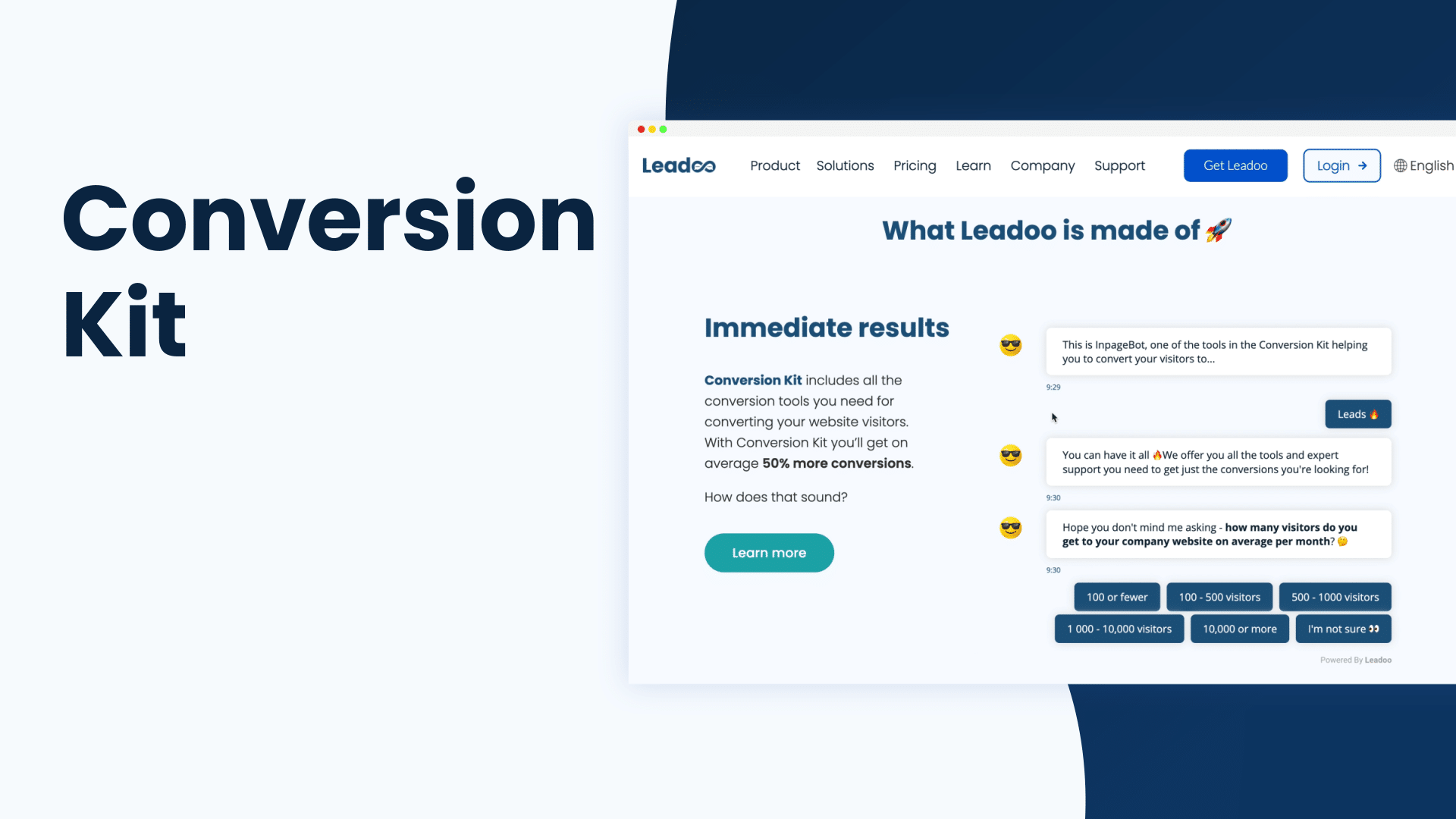
Conversion Kit
Conversion Kit sisältää kaikki tarvittavat työkalut verkkosivujesi konversioprosentin nostamista varten. Aloita konvertoivia keskusteluja sivustovierailijoidesi kanssa, aina oikeaan aikaan ja oikeassa paikassa.
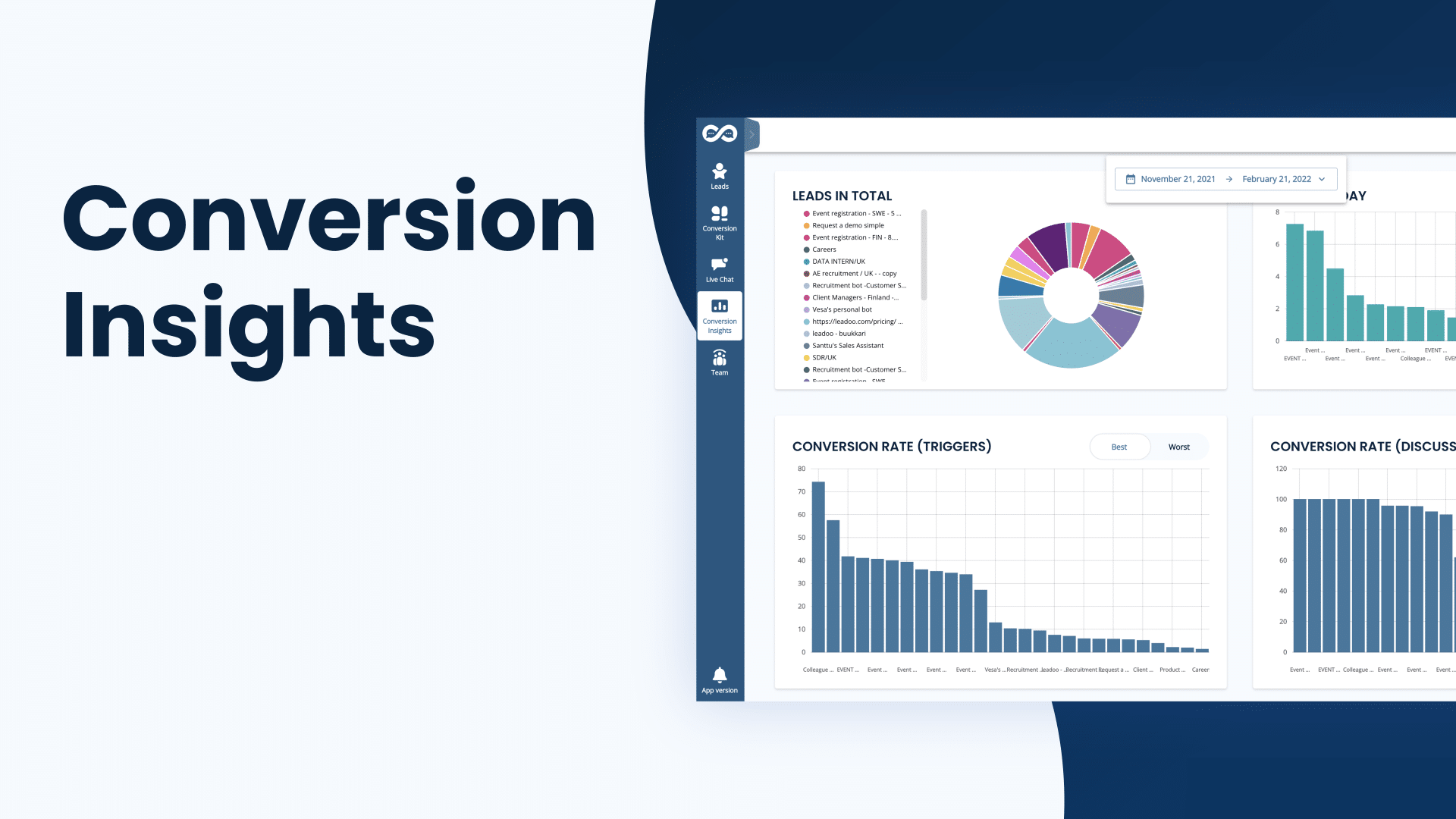
Conversion Insightson kokonainen kattaus analytiikkatyökaluja, joiden avulla voit parantaa tuloksiasi entisestään. Näet sivustovierailijoidesi ostopolkuja, tunnistettuja yrityksiä ja niiden päättäjädataa. Saat käsiisi myös yksityiskohtaista analytiikkaa keskusteluista, vierailijoiden liikenteenlähteistä ja sivustosi kokonaiskoversioista.
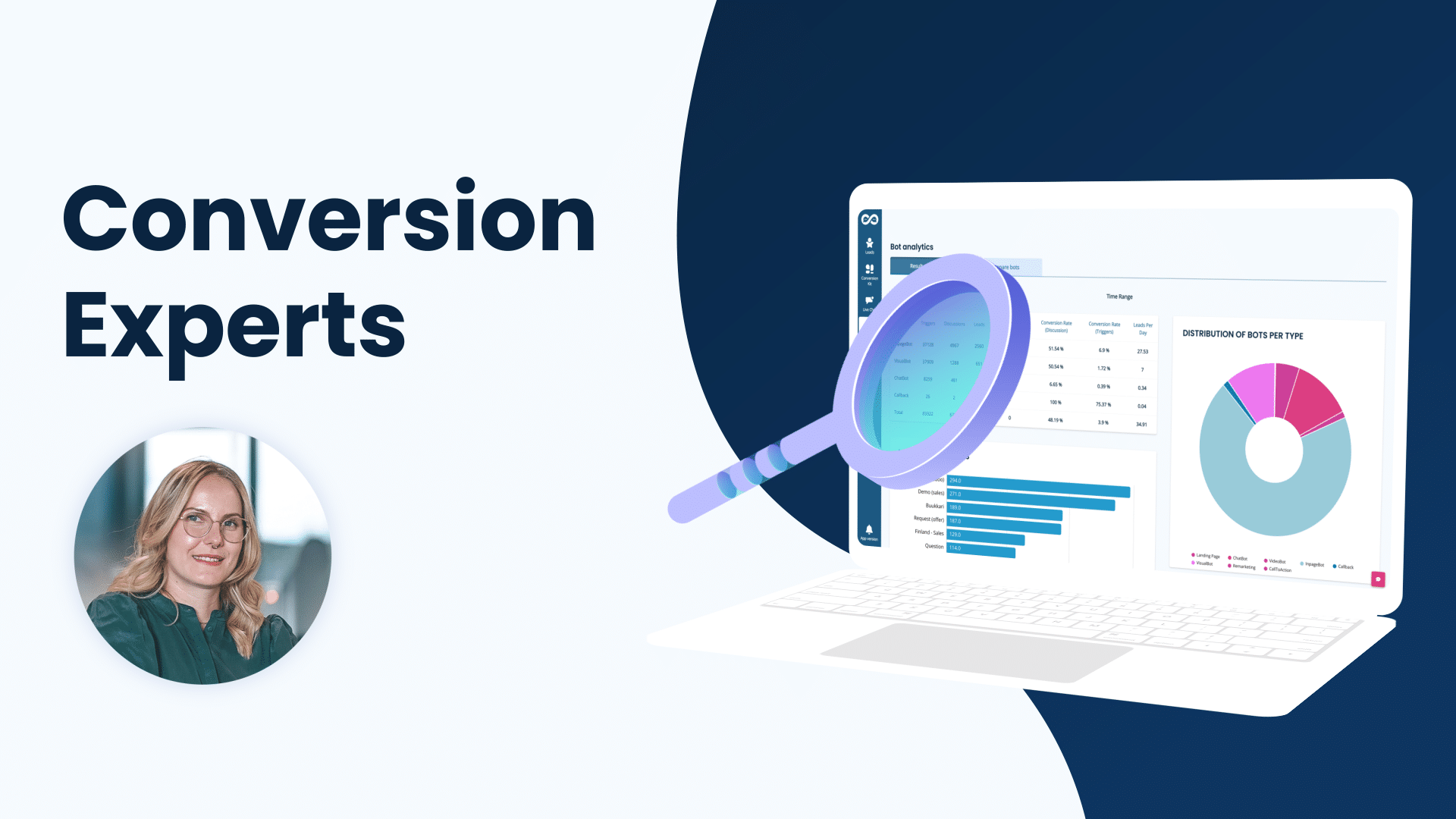
Conversion Experts-asiantuntijamme ovat tukenasi aina Leadoon käyttöönotosta jatkuvaan tulosten optimointiin.
Asiantuntijamme varmistavat, että saat koko ajan parhaita mahdollisia tuloksia Leadoosi avulla, he rakentavat konversiotyökaluja puolestasi ja pitävät huolen, että sinä voit keskittyä omaan ydintekemiseesi.
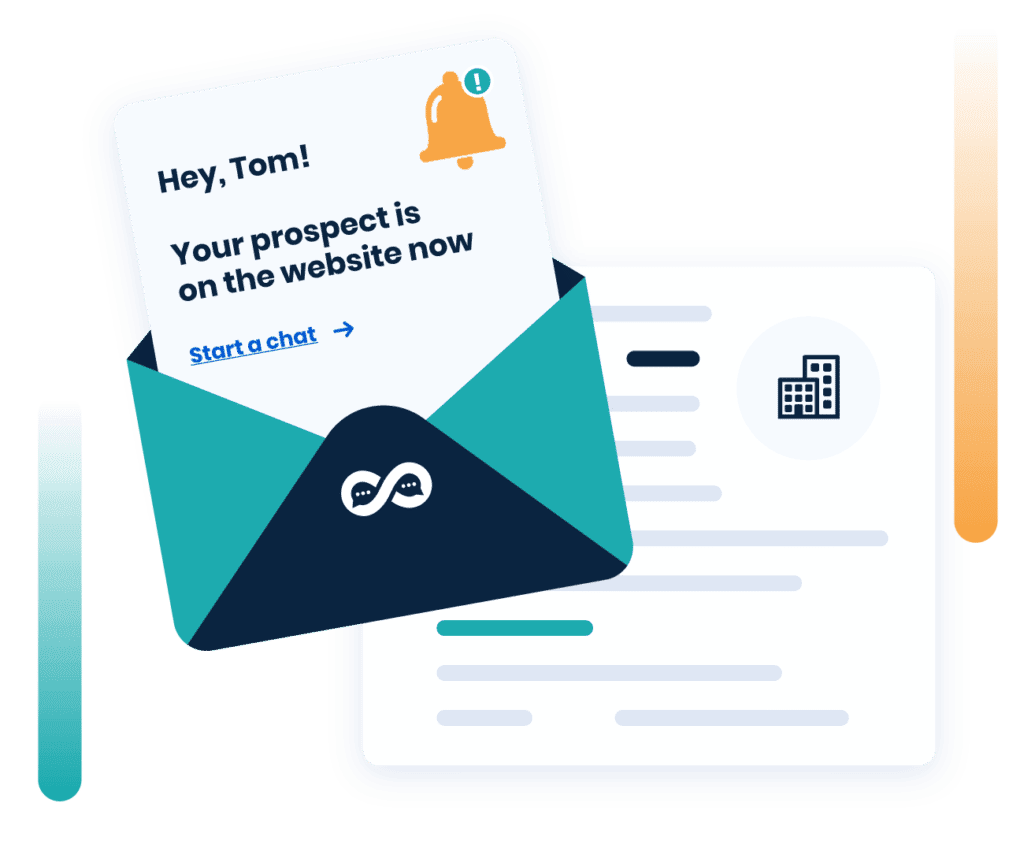
Leadoo Sales on kokoelma huikeita ominaisuuksia, jotka tehostavat myyntitiimiäsi tuoden heille reaaliaikaista tietoa heidän prospektiensa käytöksestä ja ostosignaaleista.
Anna myyjiesi keskittyä kuumimpiin, ostovalmiisiin prospekteihin, pitäen samalla huolta myös funnelin alkupäästä ja tee enemmän kauppaa konkreettisella, reaaliaikaisella tiedolla, jonka perusteella voit oikeasti toimia.
Paras yhdistelmä Conversion Kitin ja Conversion Insightsin ominaisuuksista myynnin tueksi!
Tarjoa verkkosivuvierailijoillesi uniikkeja, personoituja kokemuksia ja konvertoi heitä tehokkaammin.
Leadoo Personaliser auttaa sinua tavoittamaan verkkosivuvierailijat heidän vierailunsa aikana yksityiskohtaisten tietojen perusteella, jotka perustuvat väestöryhmiin, yritystietoihin ja vierailijan aiempaan käytökseen.
Vierailijasi ansaitsevat tulle kohdelluiksi yksilöinä – tarjoa heille verkkosivukokemus josta he eivät voi kieltäytyä!