In the competitive B2B landscape, especially within specialised sectors like building technology, the challenge for Marketing Managers often lies in translating general website traffic into concrete, high-quality leads that their Sales Teams can effectively action. This was the exact scenario facing Ubbink, a leader in the distribution of components and systems for building and residential technology.
We sat down with Kjell Teerink and Raymond Bolder from Ubbink to understand how they have fundamentally reshaped their digital lead generation strategy, and significantly improved their Sales pipeline efficiency.
The Challenge of Connecting with Specific Individuals
Ubbink’s website was primarily designed to generate interest through enquiry forms, not to serve as a transactional e-commerce platform. This structure created a common hurdle. They could generate broad enquiries, but lacked the ability to connect directly with specific, influential individuals or companies who were considered ICP.
“We started using Leadoo to solve problems related to lead interactions, especially to connect with specific individuals we considered interesting within the Dutch market,” Kjell explained. The goal was simple but crucial. Make the website an easier, more direct channel to engage with their B2B audience.
Leveraging conversational marketing tools like in-page bots and chatbots, provided an immediate and easy way to achieve these necessary lead interactions without requiring development or change to the site’s core design. It was about creating proactive engagement opportunities right where visitors were consuming content.
A Clear Uplift in Leads and Conversions with Conversational Marketing Tools
The deployment of these conversational marketing tools quickly became apparent, extending far beyond anecdotal improvements. Kjell confirmed a definite improvement in the quantity and quality of the leads generated through the website. This improvement was supported by impressive engagement and conversion metrics across their interactive bots.
The overall engagement generated by their interactive tools showed a dramatic surge.
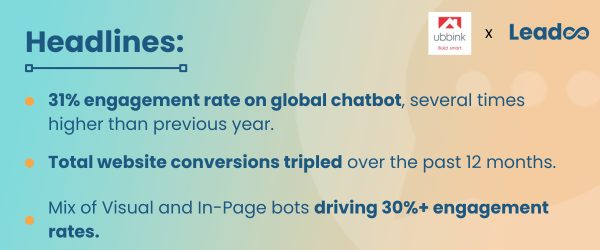
Over the past year, the Global Chatbot generated an impressive engagement rate of 31.5%. This metric alone points towards a dramatic improvement in capturing visitor attention and initiating a conversation, showing a whopping year-on-year increase of 688% in engagement.
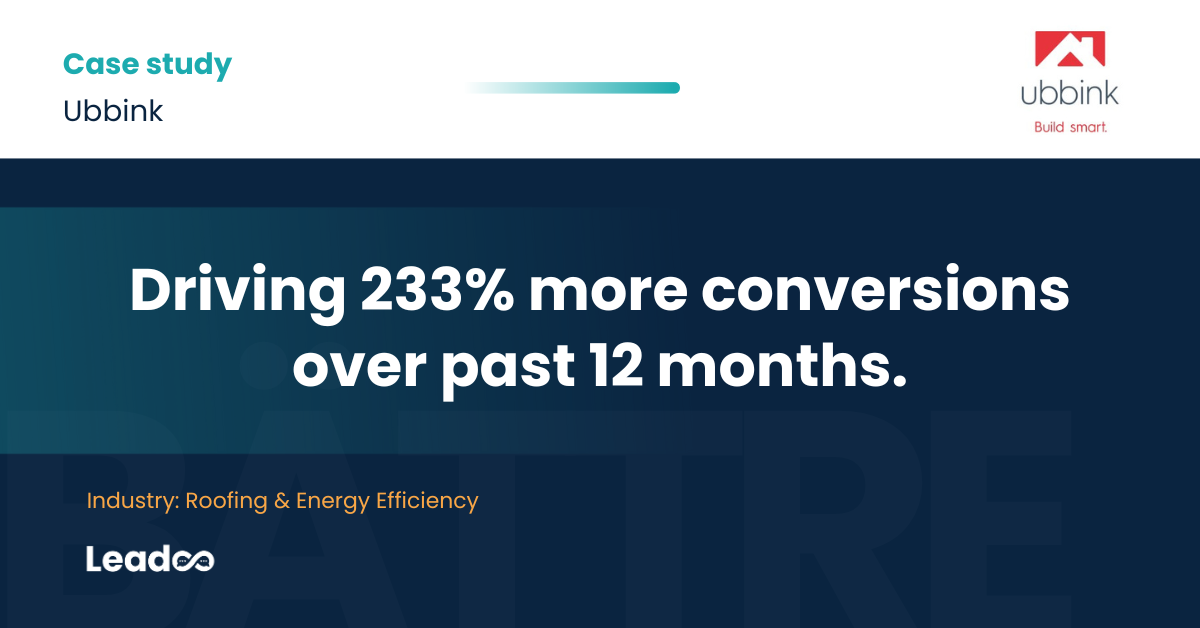
Beyond just engagement, the Chatbot drove conversions. It delivered a 6.4% conversation rate. This represented an uplift of 233% in conversions over the past 12 months.
Furthermore, the dedicated Visual Bot, used strategically on key pages, generated an even higher level of interaction, achieving a 65% engagement rate. This performance underscores the power of tailored, context-specific interactions in prompting user response.
Identifying and Prioritising High-Potential Leads
Another feature used by Ubbink is company tracking.
This, combined with high-potential lead identification, allows the team to track specific persona activities and gain in-depth views of their website journeys.
“Leadoo has helped in lead identification, allowing us to assign higher priority to high-potential leads within certain contact forms, ensuring our internal sales department focuses their time and resources effectively,” Kjell noted. This strategic prioritisation leads to more effective outbound calls and emails, and a direct and measurable impact on Sales productivity.
Leveraging Key Features and Future Development
The consistency and reliability of the identification features have made them indispensable. Kjell identified company tracking as their current favorite and most consistently used feature. They are currently increasing its use to confirm, for example, whether companies in the installation sector are engaging with content focused on product regulations, which indicates immediate project relevance, rather than just general educational services.
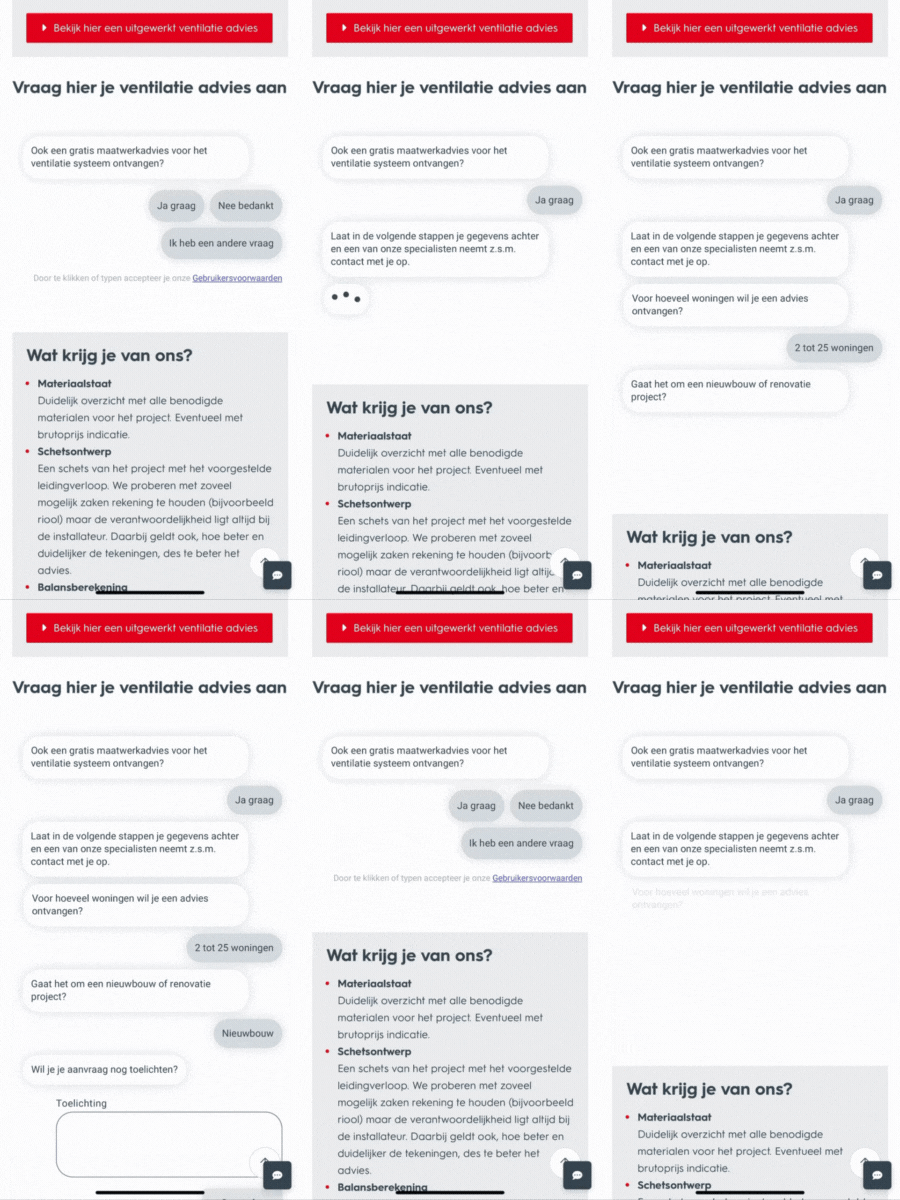
The conversational marketing tools are driving significant lead volume. The In-Page bot on their ventilation advice page, which offers in-depth product information, drove 32% of all leads over the past 12 months.
The team has also started exploring advanced features like the Leadoo AI tool. Despite initial skepticism, internal testing yielded positive feedback, with Kjell noting they “found its accuracy pleasantly surprising.”
Automating Sales Alignment
Looking ahead, Ubbink is focusing on process refinement, specifically automating the hand-off of qualified leads to the Sales Team.
Currently, the process of assigning leads to the appropriate Sales Representative, is a manual one. However, the potential for automation is high. Kjell found the idea of automatically assigning leads based on territory or specialism “a really interesting idea for the future.”
Raymond Bolder, who is involved in the process, added, “We currently have a system that assigns companies in a certain zip code area to a Sales Manager, and we hope to automate the matching of leads to the right account and sales rep in the future.” While this matching is currently manual if the account is new, streamlining this with API calls for real-time data will be the next major step.
Conclusion:
From Contact to Conversion
Ubbink’s case study provides clear evidence for Marketing Managers that significant lead generation improvement doesn’t always require tearing down the existing website architecture, or committing to conversion rate optimisation tactics that can take months to gain any statistical significance.
By strategically adding interactive, conversational marketing tools, Ubbink has solved their lead interaction problems, moved beyond general contact forms, and successfully connected with specific individuals and high-intent companies in the Dutch market.
The result is not just more leads, but a clearly defined, prioritised, and highly actionable Sales pipeline, backed by impressive metrics like the 233% conversion uplift.
Do you want to find out how Leadoo can address your pipeline creation and velocity challenges? You can book a demo with our experts, below.