AI chatbots have never been more accessible. At Leadoo AI, we’ve seen great success with our AI-powered conversational tools and our internal AI Bot Builder feature that lets customers draft new bots from scratch with AI.
With modern LLMs, no-code tools, APIs, and AI development frameworks, it’s now possible for some in-house marketing and development teams to build website chatbots themselves.
Teams understandably ask “Can we build this?” when looking at conversational marketing solutions. But as we’ll lay out here, the real questions are:
Just because you can build it – should you? And what will it ultimately cost?
Because while launching a basic AI chatbot is easier than ever, building one that actually performs, scales, stays compliant, continuously improves, and doesn’t balloon in cost is significantly harder than most teams expect.
In reality, many companies discover that the hidden costs, operational burden, and long-term ownership challenges make in-house AI chatbot development far less viable than initially imagined. And the horror stories of when in-house chatbots go wrong are very damaging indeed.

Most AI chatbot projects begin with excitement.
A team experiments with OpenAI, Anthropic, or Gemini APIs. They connect a chatbot to the website. They upload some documentation. Maybe they even launch a pilot within a few weeks. Technically, it works.
But then the real questions start appearing:
This is the moment many businesses realise:
AI chatbots are not just software projects. They’re ongoing conversion systems.
And successful conversion systems require strategy, optimisation, analytics, governance, and continuous improvement.
One of the biggest challenges with in-house chatbot projects is ownership. At launch, there’s usually enthusiasm and cross-functional collaboration. It is the newest and shiniest thing on the website after all.
But several months later, ownership often becomes unclear, especially as the difficult questions above start popping up. Without clear accountability, many AI chatbot projects quietly stagnate.
The chatbot remains live, but nobody is truly responsible for improving it. This is where businesses often underestimate the value of a specialist conversion partner.
With Leadoo AI, optimisation doesn’t stop after implementation. All our standard packages include dedicated Conversion Experts whose role is to continuously improve performance, refine journeys, identify friction points, and maximise ROI.
Because launching a chatbot is not the finish line. It’s the starting point. Check out the quality and value of our customer service for yourself on review sites like G2.
“With new AI-driven capabilities and continued investment in our platform, we’re focused on helping our customers achieve even greater results. I want to personally thank every customer – those who have been with us for years and those just getting started, for the trust they place in us.”
Many businesses measure chatbot success incorrectly or incompletely. They focus on number of conversations, engagement rates, or time on site.
But none of these metrics necessarily translate into business outcomes. The real question is:
Are my chatbots driving conversions? And if not:
Most DIY AI stacks provide logic and infrastructure, but very little meaningful conversion insight.
This creates a dangerous situation where teams assume the chatbot is successful simply because it exists. Leadoo AI approaches this differently.
Through advanced Conversion Insights, businesses can clearly understand how conversational journeys influence pipeline generation, lead quality, conversion rates, and customer behaviour.
More importantly, optimisation becomes continuous rather than reactive. Because AI without performance visibility quickly becomes expensive guesswork.
Security and compliance are unfortunately sometimes treated as secondary concerns during AI experimentation. Until legal teams get involved.
Or customer data starts flowing through prompts…
AI chatbots frequently process personally identifiable information. And many businesses underestimate the operational complexity of managing this securely and compliantly.
Key questions that any AI chatbot builder or provider MUST be able to answer include:
These concerns become even more significant for companies operating across multiple regions and jurisdictions. And in-house teams frequently cannot answer these without getting into an uncertain legal minefield. Leadoo’s platform is built with GDPR-compliant insights and enterprise-grade governance in mind – reducing risk while allowing businesses to scale conversational experiences confidently. Because compliance is not something you bolt on later.
This is one of the most overlooked challenges in AI chatbot development. Most AI tools provide the intelligence layer.
But they don’t solve the experience layer. And the experience layer is what users actually interact with. It includes: UI and conversational design; timings and triggers; mobile responsiveness; brand consistency; guardrails and fallback handling; and escalation paths.
In practice, companies often spend far more time designing and refining user experiences than building the AI itself. And without careful optimisation, AI chatbots can easily become inconsistent, off-brand or just generic (see the famous Air Canada example).
Worse still, poorly implemented, or just non-optimised, AI experiences can actively harm conversion rates and customer trust.
Leadoo AI combines conversational intelligence with conversion-optimised user experiences and built-in safeguards. Helping businesses deploy AI experiences that are not only intelligent, but commercially effective, with the help of Conversion Experts.
Because users don’t judge your chatbot on its architecture. They judge it on the experience. Here’s an example of how Leadoo AI can dramatically improve UX – even in a highly regulated industry.
Many companies pursue in-house AI chatbots because they assume it will reduce costs.
Initially, this can appear true. The first prototype may only require a developer and API access.
But costs rarely stay there. As adoption grows, complexity grows too. Before long, the organisation isn’t managing ‘a chatbot’. It’s managing an evolving AI platform.
And unlike Leadoo AI’s fixed package pricing, internal AI infrastructure costs are highly volatile with changes to AI models; token usage; and increasing computational requirements.
Internal teams also absorb hidden operational costs when it comes to maintenance, prompt tuning, analytics integrations and setup, QA and infrastructure monitoring.
What initially looked cheaper can quickly become significantly more expensive.
AI chatbots rarely operate in isolation. To create meaningful business outcomes, they need to connect with CRM, MA systems, analytics tools, or product databases.
Every integration introduces additional complexity, maintenance, and failure points. And when something breaks, diagnosing whether the issue sits within the AI or integration layers can become extremely time-consuming for internal teams. And can reignite the ownership question we mentioned earlier.
This is another reason most businesses eventually prefer managed conversational platforms over fragmented DIY stacks.
There’s no question that modern AI tools have democratised chatbot development. Businesses absolutely can build powerful AI experiences internally.
But the more important consideration is whether they should dedicate long-term internal resources to owning, managing, optimising, securing, scaling, and continuously improving those systems.
Because successful AI chatbots are not one-time projects. They are ongoing commercial programmes. And as shown, if they go wrong, it can be catastrophic for internal teams. For many businesses, the true challenge is not launching an AI chatbot. It’s sustaining one successfully over time.
That’s where Leadoo AI and our Conversion Experts shine.
Ready to find out more?
At Leadoo, we strive to make our Conversion Tools fit seamlessly onto your website. That doesn’t just mean in terms of site speed and accessibility. We know they also need to look good!
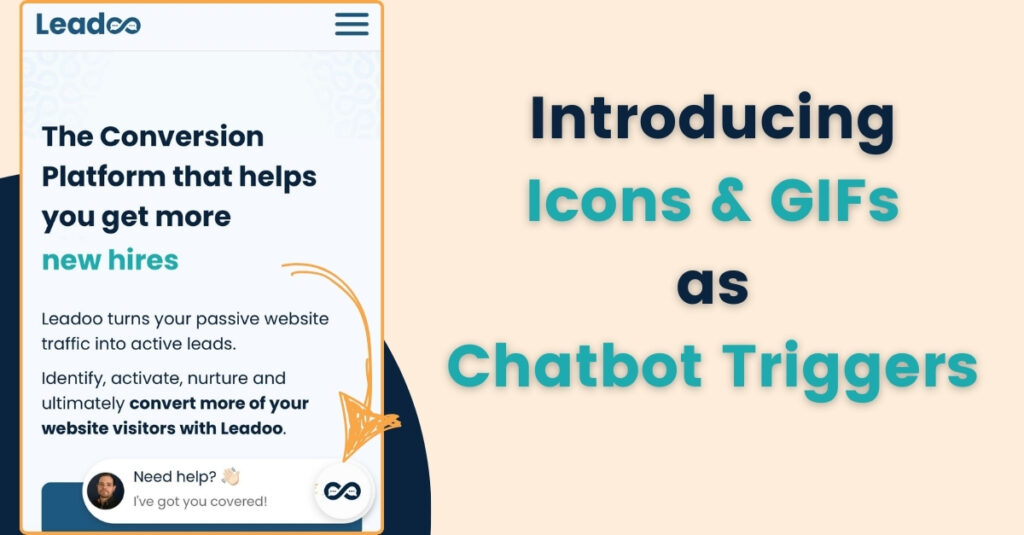
So we’re happy to announce that you can now include Icons and GIFs as triggers for Leadoo Chatbots!

Why icons and GIFs? Well firstly, we want our chatbots to be an extension of your brand. They do speak directly to your customers after all.
With all of our conversion tools, you’ve always been able to customise them with specific colour codes, messaging and formatting that reflects your organisation and branding. But now, before users even start a discussion with a Chatbot, they can see your branding assets.
Above you’ll see that we’re using an animated GIF of the Leadoo logo on our website’s chatbots. But they don’t have to be branded at all. Indeed, you could use icons and GIFs to visualise the use case for any specific chatbot.
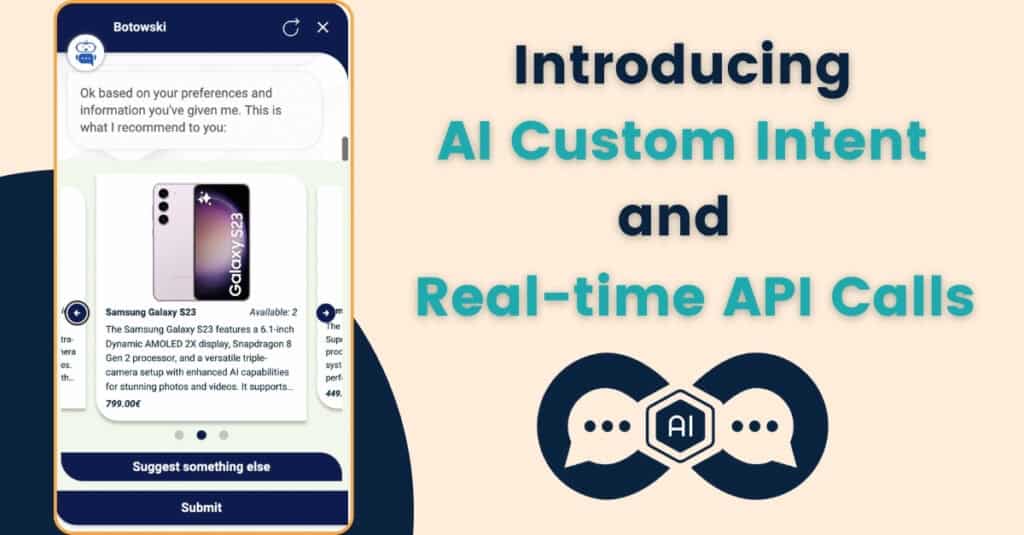
For eCommerce websites for example, you might have seen that we recently unveiled carousal product listings and real-time API call functionality within our ChatBots.

Whatever you decide for your new Chatbot trigger visuals, they couldn’t be easier to implement!
Open any ChatBot in the Leadoo platform, and under ‘Settings’ → ‘Trigger’ you’ll see the below. Where you can customise exactly what the chatbot triggers involve, with your full library of images and GIFs. All with a helpful preview mode so you can test to your heart’s content!

Once you’ve decided on formatting and messaging, your Chatbots will appear onsite with the new visual triggers. Just like before, you can still have messaging or user prompts above your Chatbots (as seen below).

But with the triggers now supporting different image and GIF types, you can now make your Chatbots even more visually engaging and appealing!

When we launched Leadoo AI, we wanted customers to be able to leverage the power of AI to drive conversions, and make their websites more conversational to visitors worldwide.
Since then, we’ve been optimising Leadoo AI to make it even more powerful. We’ve added support to new LLM models (Claude 3.5 and GPT4o) to improve answer accuracy; improved the Knowledge Base system to allow direct content editing and multi-knowledge base support; and improved lookups to products and website URLs.
Changes like these have upgraded Leadoo AI over time. To the point where it has become a touchpoint in up to 90% of website leads for some customers.

Now though, we’re launching two major updates to Leadoo AI. Introducing Custom Intent Fields and Real-time API calls. All Leadoo AI users can benefit from these, but eCommerce customers should be particularly interested – as we’ll lay out here.
Any website selling products can be supercharged by our new API calls within Leadoo AI. Because it syncs in real-time with your eCommerce platform, to display relevant and available products to users.
Layered with our existing AI capabilities, this creates a powerful combination. Where our conversational tools not only make recommendations based on user requests and preferences, but also display those recommendations visually within the bots.

As shown here, the API connection enables a phone seller to sync with their Shopify store, and display only available phones within the users designated budget of €900.
When displaying multiple options this takes a carousal format as shown. Where users can cycle through relevant product recommendations, which can include:
Think of an in-store customer assistant. Except faster and able to operate 24/7 on your digital storefront. As it’s Leadoo AI, it also speaks 40+ languages, so can serve customers all over the world!

Setting up these API connections can all be done within the Leadoo platform, and our Conversion Experts are on hand to make that happen for you. We can connect to any eCom platform with a Rest API, but have tested integrations ready to deploy for:

Custom Intent Fields are our way of detecting user intent, and directing the conversation to certain pathways based on that intent.
This can be done by tweaking the prompts of your Leadoo AI bots manually. However, prompt testing is time consuming, and can result in long and complicated prompts trying to cover every eventuality.
So instead of having to type ‘If user asks about X, direct them to Y’ into your Leadoo AI prompts, you can now use Custom Intent Fields.

In our phone example, a user naturally might need help finding the right model for them. Any number of factors could go into this. Brand preference, budget, camera requirements, battery life, etc, etc.
So we create a Custom Intent called ‘Phone Recommendations’. This will kick in if the AI determines that our guidance of ‘Try to recognise user intent for purchasing or looking for information about phones. To give recommendations, we need to ask for budget and brand preferences’ has been met.
To help it recognise this, we enable you to give ‘Example Utterances’ to follow – like ‘i need a new phone’ ; ‘my phone broke’ ; or ‘i can spend up to’. If a user says something along these lines, our Custom Intent will kick in.
Within this Custom Intent, you can also specify what information should be collected by the AI. For example, to give recommendations it will be essential to know the user’s budget. So we create a mandatory ‘Meta Field’ of what info is required for the Custom Intent pathway to continue.
This could be anything from whether or not they are an existing customer; to how much they want to spend; to if they have a favourite brand. Meta Fields can be mandatory or non-mandatory. Often they will be helpful, but not essential for the AI to make a suggestion. For example, what colour a customer is looking for.
Once you’ve set your Example Utterances and Meta Fields, your Custom Intent is ready to be applied to any Leadoo AI bots, as shown below.

You can add up to 10 Custom Intent Fields. Which will serve as advanced routers within your AI bot setup – e.g. ‘if user shows intent about X, do Y.’
The end result? More relevant and satisfactory interactions for the user – based on what they actually wanted the bot to show them. As well as less prompting and maintenance needed in the backend of your Leadoo AI.
Better, more relevant UX. Combined with less setup for you. An example of AI truly making everyone’s lives easier!
One of the best parts (we think!) of our whole product offering is the after-sale service provided by our Customer Success team. We’re not one of those companies who gets you to sign on the dotted line and then runs for the hills. Not our guys. They’re here to help our customers meet their conversion goals, forever.
This is all laid out in a neat process – once our customers have completed Onboarding (which you can read all about here), they are assigned their very own Customer Success Manager (CSM). The CSM is responsible for their account, working alongside the in-house team to make changes in order to optimise. This can look different from meeting to meeting – from tweaking bots to making suggestions based on analytics, to ideation of new bots and conversation paths based on business goals.
Abbie Baisden is one of our Senior Customer Success Managers here at Leadoo. She’s been working with us for almost two years, and has helped hundreds of clients meet their optimisation goals. I sat down with her to hear all about what her part to play in the process is and how that looks from a customer perspective.
“When the first bots get published by Helen, I receive a handy notification about who the client is, along with a brief.” explains Abbie. “I’ll then be in touch with the client and book in their first meeting. It’s also a great opportunity for me to initially introduce myself as I will be working closely with them going forward to get the most out of their Leadoo solutions.”
“During the first meeting, after I’ve introduced myself and gotten to know the client team, we then start by looking at their Leadoo dashboard. This is so I can make sure we are all happy with what we’re measuring, how that impacts on conversions and so on.” says Abbie. “Sometimes we’ll have a member of the sales or marketing team who have been in touch with the client in the meetings with us, to make the transition over to me that little bit smoother for the client” she continues. “On the client team, it’s usually the person who bought the platform and then the person or team who will be using it.”
“I also make sure to get feedback from the client about how they have found the processes moving from one person to another, such as from Helen to myself. Next, I go through their solutions, making sure that we’ve really understood their goals, and we check their bot placement and their conversation paths. Of course this is also an opportunity for us to pick up if something is not working as well as we’d like, and this is where we can make tweaks to the bots to improve results in particular areas.” explains Abbie. “I then provide them with some feedback on lead quality, as well as look at whether there are any other ways they’d like their leads qualified.”
“It helps provide the client with concrete outcomes – they will understand how many leads have come through the bots, how many triggers they’ve got, understand what we’re going to do next, and understand what kind of changes need to be made and why. Then we come to a decision together on what we are going to measure. What would success look like to them in two months time?”
Throughout the meeting Abbie will keep notes and share these with the client. This is so that everyone has a written record of what was agreed and what needs to be delivered on the client-side as well as on Leadoo’s end. This is also a perfect opportunity for the client to ask any follow-up questions before they set dates for the next few check-up meetings.
“By the second check-up, the bots we’ve put in place should easily be operating at optimum level. The next thing is that we then want to look at the client’s upcoming plans – are you doing any marketing promotions or launching new products? There are normally lots of things that might be happening on the website where we could put something in place to help you. It’s also an opportunity to check whether you are using your Leadoo platform to the absolute best it can be and for you to test different approaches.” Abbie explains.
“We can also have a look at the analytics and use the information there to help us tweak any bot conversations that may need minor changes. It’s always an ongoing process of improvement. That said, within three months we can already see how things are working and can utilise our expertise to optimise your solutions and maximise your conversions.” she continues.
“The thing I’m probably most proud of is that it’s never a copy-paste job with Leadoo. We pride ourselves on our handcrafted, bespoke dialogues, created for each client for their specific context. That’s because, even though we have clients from the same industry, their customer needs often vary somewhat, and we want to target them really precisely every single time.” Abbie smiles.
“Again, during this meeting, we’ll provide the client with concrete outcomes – look at what is performing well, and make a plan for the next things we’re going to test. We agree on the next set of targets and how we’re going to be measuring those. We’ll also look at their overall business objectives for the next 3 months, which will help us also to analyse the numbers in the correct way.”
This is a much more collaborative way of working – and that’s exactly how we see our ongoing relationship with our customers. It’s a team effort, and you’ve picked the best team to be on.
“One really nice thing about the second check up is that clients are more likely to proactively be in touch with us at this point in the process. They’re more comfortable, they’ve seen some improvements, they’ve got some ideas and they’re ready to make a big impact.” Abbie concludes.
Our CSMs stay in touch with you, and look to meet with you around every three months as a minimum. “The relationship forms into something that fits the clients’ needs. By the sixth month, clients are usually very engaged with the platform and are excited to do some top-up training on specific parts of Leadoo.” says Abbie. “Our amazing product team are also always releasing updates to the platform, and so we need to make sure that clients are aware of any changes and where different features have moved to, as well as any new features they could make use of.”
Much of Leadoo’s development happens as a direct result of client feedback or ideas during check up meetings. We love to create unique use cases and try out different approaches for our customers. It keeps things fun 🚀
“Like I say, it very much depends on the client team, and how much they want to get involved in the platform. Some clients might not even log in between the meetings, and some clients log in every single day and create bots, analyse the data and more self-sufficiently. These clients use our experts for more complex queries and use cases, which is always fun to do.” explains Abbie. Both customer types are frequently in touch with Abbie, for a range of different reasons. Analytics is an important thing to understand – how to read them and navigate that part of the platform.
“The relationship we build with our clients is super important because sometimes you will find an opportunity for us to help with something during the ‘chit chat’ rather than the more formal questions we ask. When clients are comfortable with you it’s easier to get genuine feedback and have a productive discussion. Also, they’re all really nice so that makes my job quite easy in a way!” Abbie finishes, as she ducks out of our meeting to go and meet with another happy customer.
We’ve had some pretty awesome feedback from our lovely band of clients. You can read some great examples in our case studies section.
We know you’re busy, so just in case that’s a bit TLDR for you right now, we grabbed some snippets so you can get the gist, in short form 👇
Know the quality of leads coming through and give us honest feedback on your experience so far. Even if you think it’s bad, we need to know what needs sorting so that we can get right on it and keep improving your results.
Our relationship with clients is always a partnership. But, our experts are just that – experts – and so we ask that you come with an open mind towards trying things out. There’s usually a method in the madness.
As the old saying goes, there’s no such thing as a stupid question. To make the most of the platform, you need to understand it, and we’re always here to help you do that.
You’ve seen it a hundred times; the lengthy, boring contact forms that want every bit of detail from you, from your aunt Jackie’s maiden name to your blood type and star sign. You know the ones – the ones that take an eternity to complete. They’re not something I ever feel particularly motivated to do – I’ll avoid it at all costs if at all possible. I’m sure I’m not the only one, and this is a problem for businesses because we need our customers to give us information so we can take action and provide them with solutions. Contact forms *can* be an excellent way to improve your conversion rate. And this is where Leadoo’s VisualBot steps in to take centre stage.
VisualBots seamlessly integrate with your content to provide customers with a visual experience when interacting with your site. They are incredibly versatile – options include pictures and gifs – and they allow you to gamify the customer’s journey, to keep them interested and provide you with more information to help you convert that customer into a potential sale.
If you’re still not convinced, here are 6 impeccable reasons why they’re the contact forms of the future, and a whole lot more…
Static forms are really boring. Customers already lack the motivation to fill out a contact form, and this is usually a source of high bounce rates on contact pages. The answer is surprisingly simple – make it as easy as possible for customers to leave their details with you by making it engaging and fun to do, and they will. Smack them in the face with pages of boxes to fill in, and they’ll get bored quickly, get distracted, or not bother at all.
But, VisualBots allow you to gamify the customer experience, to activate these passive visitors and get them willingly providing information that allows you to take action. They’re an aesthetically pleasing experience for the customer and allow you to draw their attention to answering the questions you need answers to. Static forms can easily be reformatted into fun visual screens consisting of interactive elements that help the user to send their interest within seconds without breaking a sweat.
And with a VisualBot, you can provide the context every time. It’s no secret that customers are erring towards preferring personalisation as part of their experience – and the ultimate in personalisation is being able to provide context specific support at every point of the customer journey to remove as many barriers to conversion as possible.
Contact forms don’t have any versatility – the content of the form is often exactly the same for every visitor. That means visitors with a whole host of queries and questions end up having to fill out the exact same form, making lead handling hard work, and with no relevance to the visitor. This can be off-putting, especially if the content of the form doesn’t seem relevant, and may mean the visitor decides to leave no details at all, and look elsewhere for their needs to be met.
VisualBot allows you to display only the questions that are relevant to each different visitor type, at every step of the journey, getting customers to where they need to be on your site faster, and engaging them so they leave details for your teams to act upon.
Knowledge is power, and you can have access to the ultimate knowledge when you pair VisualBots with SmartProfiles. SmartProfiles allow you to see information about the customer and their touch points across your site. You can see which pages they have visited and when. VisualBot collects their information, so your sales team are armed with not only the information the customer has provided, but which pages have been of interest to them – meaning you can see which products they might need, along with potential opportunities for upselling if they have shown interest in a range of products.
In addition, SmartProfiles allows you to see information about the company each visitor is from, such as the name, location(s), headcount, yearly revenue, and more. This gives a comprehensive overview of not only the customer’s journey, but the company and industry they operate within, allowing you to arm your sales teams with the best info for when they make their approach. Awesome, right?
Manually forwarding leads is a humongous waste of everybody’s time and let’s be honest, super boring. Well, VisualBot can do that job for you too, and can even send all that juicy info within their SmartProfile straight to the relevant salesperson’s inbox.
This means a smoother experience for the customer – they end up with the right person, every time, without being handed between different departments and slowing the process down. The longer you take, the more chance they might start looking elsewhere for their needs to be met, and we definitely don’t want that.
A form submission is a world of opportunity. If your visitor has already made the effort to get in touch and gone through the process of filling out a form, there’s a pretty good chance that they will be open to more.
With VisualBots you have the chance to continue discussion when the initial form submission is done. For example, sales teams could get in touch and try asking to gauge any interest for added services (those added sales are waiting for you!). These are extra opportunities to convert customers and upsell products which would complement their selection.
Consistency of experience is something we’re all striving for – we want our customers to have the same, excellent experience every time they interact with us. And that comes from the big picture, in logos and across overt media such as Facebook. But it also comes from the minute details; the familiar, accented colours, the easily recognisable tone of voice in each interaction. And the VisualBot is a perfect opportunity to keep your brand image consistent in every interaction you have with customers.
It’s fully customisable and versatile – you can change the colours to your brand palette, add in pictures, gifs or other branded visual elements to answers to help customers understand both the brand and their options, provide visual calendars and bookings and more. And the best part is, you can use them alongside other bots, such as ChatBots and InpageBots to improve your conversion rate by being available at every touch point the customer . If you’re not too familiar with bots, or want to read more on the benefits of bots and their uses, you can check out our Complete Guide to ChatBots.
Static contact forms are dead💀. Long live the VisualBot.
Sorry, not sorry. Your customers deserve better.
Lets start by defining what is a chatbot. A chatbot, or a “bot”, is a software application used to conduct an online conversation. Chatbots are designed to simulate human conversations but on scale by automating different conversation paths.
The purpose of a chatbot is most often to provide personal service and help for website visitors. But they are as effective when used in sales, lead generation and also in the recruitment process. The use cases for chatbots are basically unlimited.
Some people might be intimidated by bots and machine conversations taking over. Most likely, though, you’re not one of these people as you’re already here. What might come as a surprise is that website visitors often don’t care whether it’s a machine or a person, as long as they get help quickly. And actually chatbots are in many ways just as humane as people.
This article offers a deep dive in the world of chatbots and consists of the following topics:
We’ve dropped bits and pieces of interesting chatbot data and facts here and there. So, all in all, you’ll find this article bursting with facts about bots.
In short: chatbots provide better customer experience to website visitors. Chatbots are good at this by making visitors feel they are heard and by being there 24/7/365.
The value of bots is often underappreciated because they are seen primarily in terms of customer service. Whilst this is still true, benefits such as personalization, engagement, visitor activation, and lead generation are just some of the modern ways chatbots add value to your customer relationship. Below we go into more detail with 8 essential values of chatbots:
Fast Response
In today’s marketplace, speed and convenience beat price more often as the most valued asset. Sinch found 68% of customers with a positive experience of chatbots, said they liked them because they answered questions more quickly. If you’re not able to offer customers a response on Live Chat within the first minute, then you need to think about bots.
Increase Sales
Well-designed chatbots can not only provide great customer support, they can use the information about the visitor’s interests and preferences and provide advice, offers and purchase suggestions. The traditional way to convert people from a website has been through a contact form. But there are several reasons why and how chatbots outperform them by a mile.
Reduce Costs
Chatbots have long been a great way to reduce costs. They can automate basic questions and conversations that suck up the time of your people. Even if you have Live Chat agents, bots respond more quickly. This is especially true when the dialogue is directed by the business.
Scale Staffing Resources
Much of the customer service experience and buying journey needs to follow a simple question and answer interaction. Sales reps want to be engaging in the most critical and valuable points on the journey, as do your support teams. Free up their time and see the energy and effectiveness of your staff improve as they eliminate repetitive work.
Enhance Customer Experience
As well as being fast, chatbots offer many other attributes that enhance CX, from anonymity and accuracy to multitasking and unwanted phone conversations. We all know what effect retention and decreasing churn have on the bottom line.
24/7 Service
Customers are increasingly enjoying positive experiences with chatbots, with many citing the speed and ease of access as the key benefit. Bots are based on predefined answers, so they can choose the question. Also, humans need to sleep but chatbots are there, 24/7.
Customer Activation
Highly engaged customers buy 90% more frequently and spend 60% more per purchase, with 3x the annual value. Activation is another way to look at engagement because often visitors, particularly those fresh, inbound leads first visiting your site need to be pointed in the right direction.
Customer Relationship
Personalization is a major factor in modern marketing and customers expect a relationship with their brands. Companies need to mirror more and more closely what consumers would receive from an in-person exchange. Conversational data can be analyzed and deliver invaluable insight into individualized marketing campaigns.
There is this one really thorough article we wrote about the benefits of bots for a better online customer experience that you might want to read. But now, let’s continue forward!
Find out how much chatbots can improve website conversion rates in your industry. Incl. data for 25 categories + pro tips for getting started.
There are several different ways to operate bots. The world is buzzing about artificial intelligence (AI) and machine learning (ML) chatbots. The truth is that most chatbots are rule-based and they do their job even better than the fancy high-tech bots. In all honesty, who hasn’t run into an AI chatbot that gets stuck when it doesn’t understand what you’re trying to ask of it…? No matter what kind of chatbot you go for, building a solid conversation flow is the key.
Like always, every different kind of chatbot has their pros and cons.
In essence, this means that the conversation paths are defined and built into the bot. The underlying tech may be simpler (no machine learning or artificial intelligence involved) but this approach emphasizes the need to understand your target audience. In fact, understanding the needs and behaviors of your users and customers is essential whatever bot technology you employ…
USER EXPERIENCE: Users of handcrafted conversational bots are limited by a defined set of alternatives. The big difference is they won’t hit a wall on the way to conversion because the dialogue is based on a decision tree that always works. With handcrafted bots, if you know your target audience, a few chosen options are all you will ever need. Often, a set of defined options can actually be preferred because typing (especially on mobile) can be cumbersome. Plus, the conversation always flows towards a goal defined by you.
SETTING IT UP & OPTIMISING: Rule-based bots are quick to setup. It takes just a few hours to get started and you don’t need developers to help you get up and running. It’s also easy to adjust a handcrafted conversation compared to an algorithm. No need to re-think or re-teach an algorithm. Easy customizability means that you will actually make the adjustments when there’s a need for it. In the best-case scenario, your provider will even suggest improvements and take care of them for you.
Essentially, AI or ML chatbots provide chatbot conversations by using sets of data. As the available data expands, they should become better as they gather and learn from the information.
USER EXPERIENCE: Most of the AI and ML chatbots are designed to handle a single task. This is due to the required processing power, storage and use of data and the like being quite expensive and not yet very sophisticated. If the user is set to complete a really niche task, the chatbot user experience is remarkably good. However, if the issue concerns a more complex task then the chatbot runs into trouble. For example, users in the process of purchase, seeking to confirm a delivery-related detail, might find the chatbot fails if it’s designed for customer service rather than sales.
SETTING IT UP & OPTIMISING: The setting up of AI & ML chatbots takes months or even years. It requires a vast amount of data and tech-savvy people in addition to customer support, marketing and/or salespeople to train the chatbots. The project team needs to invest a lot of time into the project. Even though you might think that AI and ML chatbots would optimise themselves, that’s seldom the case. AI chatbots require constant effort from the project team to improve.
As mentioned earlier, a lot of companies are using chatbots for customer support whereas only a few are using them for generating more leads or online sales. In addition to those two use cases, chatbots can be used for recruitment, in the fight against a certain deadly virus, and many others. In truth, you are only limited by your own imagination.
Whatever use case you might want to pursue, there are best practices for how to build the perfect chatbot.
Here are some of the most common chatbot use cases:
Customer support
Well, this is by far the most common way of using chatbots. Automating the frontline of customer support allows the customer support functions of a company to focus on the most difficult issues. Bots can take care of the repetitive tasks that would normally overwhelm the support desk.
Generating leads
Live chat has been a source of leads for many websites for several years already. In light of this, it’s strange that it’s not common practice to use chatbots for the same purpose.
Chatbots can ask a visitor the same questions a sales rep would (within limits of course – you don’t want to annoy visitors). In addition, chatbots won’t need lunch breaks or have an ‘off day’. Finally, while many customers visit websites during the weekday, often evenings and weekends are the most lucrative.
Utilising chatbots for improving website conversion is a new tool to help you to reach your lead generation targets.
Increasing online sales
Often, we all require some reassurance about an issue before clicking that final “order” button in a webshop. Clicking on live chat in the bottom corner is one solution but it often takes a while for an agent to show up or the live chat is closed and there’s no one online.
With chatbots, it’s very easy to automate these “FAQ conversations” so that people get the help they need and get it quickly (it’s amazing how impatient many of us can be online!).
If you’re interested in chatbots as a way to improve your online sales and lead generation, then read this piece about 5 ways to increase online sales from your existing website traffic.
Recruitment
Using chatbots in recruitment is not yet very common but is about to disrupt the industry. As a sector, recruitment has been focused on internal processes rather putting the candidate first. However, this approach is changing fast as companies engage in a constant race for talent.
Chatbots in recruitment can lower the barrier for people to apply whilst also offering pre-screening on behalf of the recruiter. Chatbots are brilliant at dealing with the first phase of the recruitment process. Automated job interviews save hours of wasted time in screening and tailoring CV’s. Avoid the worst case scenario where all that unnecessary information is just copy-pasted into a company’s recruitment platform.
Utilizing chatbots as the first phase of the recruitment process also plays with our basic psychological need: the need to be recognized. That’s why a combination of chatbots and gamification offer the perfect hook to attract more and better talent to your open vacancies.
Chatbots are not necessarily for everyone and you need to ask yourself the right questions to determine if they will work for you. Below are some of the ways to examine the feasibility for yourself:
Engage & Activate
A whopping 97% of your website visitors are passive so only 3% are actively seeking a solution right then and there. This means that only a handful of people visiting your website will move mountains to get where they want to be. The majority will leave if you don’t activate and engage with them. Is your website activating visitors? Can they easily find what they are looking for? If you hesitate in answering either of these two question, you might want add chatbots or some other activating elements to your site.
Repetitive Questions
Ask yourself, how much time is spent by your teams answering common questions or redirecting people to different departments? What about trying to locate information on your website? Time spent with these repetitive queries is time away from more complex issues that truly need a human touch.
Poor CX
The question you need to ask yourself here is, how fast is fast enough? 82% of consumers expect an immediate response when they have a sales or marketing question. Our world is a demanding and instantaneous one, so if your team isn’t able to respond to customers fast, it’s time for a chatbot.
Maintain Privacy
When thinking about chatbots, consider customer data issues and how the information is shared and stored within your customer support systems. Some industries need to handle sensitive information. It’s important to consider security in your chatbot decision, but these privacy concerns shouldn’t hold you back. You’ll see below that Banking and Health sectors, for example, are major beneficiaries of chatbots.
Lead Qualification
Chatbots are great at qualifying leads. Two signs chatbots are right for you. First, that you have yet to define a clear lead qualification process. Second, that your sales team is overwhelmed by the number of potential leads coming in. In the first case, you should factor chatbots into your planning. In the second case, get a chatbot – like, yesterday!
Multi-channel Messaging
The last question to consider is, are you interacting with customers and leads in the medium they most prefer? We’re all using social media like Facebook and WhatsApp on a daily basis and some chatbot providers now offer integrations. This enables your team to manage all customer and visitor communication in one place.
If you need to think more about this, head to this article 5 signs you need a chatbot on your website. Definitely a valuable read.
There are few main things that can help you identify what kind of chatbot to choose for your company.
Time Available
How much time do you and others in your organisation have for setting up the chatbots? Can you you be there to constantly optimise, teach and maintain the chatbots? Do you want the value of chatbots but with a no-fuss, quick setup?
AI and ML chatbots are time-consuming projects but it doesn’t stop there. Someone needs to constantly train an AI bot as well as monitor the algorithm. Essentially, it’s not a project or tool, it’s an entirely new process for your company to manage.
Rule-based chatbots, on the other-hand, are quick and easy to set up and some providers even create and optimise bot conversations for you. Good customer support will pick your brain about your industry, customer behaviour and your company’s strengths and then create the bots for you.
Skills
What kind of skills do you possess in-house? Do you have skilled data and IT professionals committed to the project?
To get them up and running, all chatbots need the customer knowledge from your people (including sales, marketing and customer service). There’s no way around that. Then it comes down to what other competences you have in your organisation, like data and IT specialists. Have you got these kind of people in-house and how committed will they be? If you’re even a little unsure, taking AI or ML chatbots will probably lead to bad bots that don’t help anyone. If you only have business people involved, rule-based bots are definitely the way to go. Rule-based bots are quite easy to setup – check out our best practices here.
Setup Time
This is quick & easy to assess: do you need chatbots up and running asap? If your answer is yes, then go with rule-based chatbots. If not then you can allow other considerations to influence your chatbot decision.
Budget
Are you willing to invest hundreds of thousands into your chatbots or are you more interested in getting started with something smaller? Does the investment need to be precisely budgeted or do you have space to move if you need to invest more into your project?
Rule-based chatbots are fairly cheap and easy to budget. It is also quite easy to calculate the ROI for your investment.
The cost of AI and ML chatbot projects tend to start in the tens of thousands or even hundreds of thousands. Like many other IT projects, it’s hard to estimate the expense accurately beforehand.
Versatility
You are most likely planning chatbots for a specific use case, like automating website customer service or for lead generation purposes. Bear in mind that chatbots have several other use cases as it states in this article. Don’t let the chatbot technology you choose limit your options in the future.
Optimization & Analytics
One might think it’s easy to create conversations that help website visitors. Actually, that’s not always the case. That’s why it’s really important to have proper analytics in place when operating your chatbot. Analytics will show you which parts of the conversation work and which don’t.
AI, ML or Rule-Based chatbot?
All have technological pros and cons. For example, in all their intelligence, AI-bots still tend to have a low tolerance for real human language. Another weakness is that if people are given the opportunity to ask the bot anything then they really will. As a result, the conversation isn’t always moving towards conversion. On the other hand, handcrafted conversational bots don’t reach the adaptability level of AI. Nor do they have the ability to learn like ML bots do.
Much of the decision-making comes down to the service part of the deal. Having a dedicated expert guiding you through the design process, challenging your assumptions and providing further optimisations, can make all the difference in ensuring a return on your investment. In most cases, AI chatbots are unnecessary, particularly for smaller and (most) medium-sized businesses. Larger companies needing to organise customer service for thousands or millions of consumers are a better fit for AI and ML.
If your goal is to generate leads from your website, you should already know the questions and concerns that your prospects are seeking answers to. The same goes for handling frequently asked questions. In other words, nothing is stopping you from designing conversation paths that address your website visitors’ needs perfectly well. Handcrafted conversations are surprisingly effective. On top of that, they’re quick to get started with and easy to improve as you go.
If you are interested to dig deeper into the differences between AI, ML and Rule-Based chatbots, we wrote this thorough article on the subject.
Leadoo – A chatbot provider that offers chatbots along with messaging features and tools for the mapping of a customer journey. Focuses on making websites convert more sales and leads and enhance the customer experience. (Note: author of this article.)
Drift – A conversational marketing chatbot provider focusing on creating a better user experience through chatbots.
Intercom – A customer service-oriented chatbot provider that originates from live chats.
There is also this pretty handy comparison whitepaper that places these competitors up against one another and lets you decide which is the best.
Hopefully it is apparent to you that there are several benefits and use cases chatbots cater for. Chatbots can not only help you save money and time but also generating additional revenue by increasing online sales or lead generation.
This article contains the basics of bots whilst also offering some additional detail to help you deepen your understanding on the subject.
We hope you found this article useful. We would be especially grateful if you have time for some feedback by talking with our chatbot (obviously) below 😉 ⤵️

Are you looking for ways to increase engagement with your brand? Do you feel like the content you painstakingly produce just isn’t cutting through? Maybe it’s time you tried incorporating gamified elements into your material.
Gaming is not the same as gamification
For some this may be obvious but gamification is not the same as gaming. Gaming is the production of a separate medium whereas gamification is the application of the principles of gaming to marketing or educational material. What gamification seeks to achieve is increased engagement and understanding of content through our natural attraction to game principles.
The following post will explain how gaming principles leverage our human instincts for competition and game scenarios, what these gaming principles actually are, and finally ways those principles can be introduced to provide value to your business.
Gamification activates the following elements of human motivation:
– The first is our desire to compete. Whether we are trying to demonstrate our knowledge on a subject by taking a quiz or completing a crossword, or whether we want to establish a position in a community, competition is a deep survival instinct. We either want to demonstrate our strengths or we see what others have done and want to receive the same benefits.
– Next is the importance we attach to status. Like all of these motivations they fluctuate depending on the individual, however, most of us take pride in having others recognise our position in a community. Although status through gamification doesn’t hold the prestige of work or education, it can be just as powerful, especially when applied to mundane or routine tasks.
– This is the most obvious gaming motivation. Dopamine release is triggered in our brains whenever we achieve even the smallest of goals or targets. The design of a challenge can trigger this sense of achievement in itself but recognition of the achievement will also have the same effect.
There are other motivational elements applied in gamification principles, such as self-expression or altruism. However, these are less common and powerful than the three mentioned above, as well as being more difficult to incorporate into a basic gamification strategy.
Competition
All gamification principles and ideas can be categorised under the umbrella of competition, status and achievement. In the first place, our competitive instincts are what draw us into the idea of a challenge. It’s worth remembering that ‘challenge’ is a flexible term. Think about all those ridiculously easy facebook quizzes that state only ‘3 out 10 people can name all these cities’. You know they’re clickbait and obvious but you just can’t help yourself! We love the idea of proving to ourselves (and others) that we are smart.
A good example is the National Geographic competition run in order to promote interest in the second season of its show Genius. Spread out over a period of five days were clues that fans of the channel had to figure out. In this case, the questions were a real test of knowledge regarding topics such as architecture and history. Even though there was a prize at the end, you can be sure there were many who were hooked on the idea of demonstrating just how clever and capable they are.
Status
If your gamification strategy is being built for the long-term, then it’s important to think about status. Individual progress should be measurable through the accumulation of points. Those points can lead to different levels and be recognised on a leaderboard. The issue of external status is one element but then appreciation of personal progress is another.
One example I know well (because my mother-in-law is hooked on it) is the foreign language learning software Duolingo. They have different leader boards for whatever learning stage you’re at, and in whatever language you’re practicing. If you don’t keep at it everyday then you lose your position. Also, if you lapse and forget, there’s some notification reminders that evoke a sense of disappointment. It’s all designed to help tackle the daunting challenge of learning a foreign language by breaking it up into manageable pieces.
Achievement
Whether or not you can create an effective gamification challenge alone doesn’t necessarily matter if you can supplement it with a system of rewards. Coupons, prizes, giveaways etc. have been used by businesses for a long time. Lavish holidays or expensive cars are now commonplace. However, again you don’t have to break the bank in order to activate the human desire for rewards. Earning badges or certificates are a great example of a budget reward mechanism. Prizes and goods can be initially virtual and then could be exchanged for tangible assets if the programme proves successful.
The company SAP needed to quickly get its huge global team of sales staff to quickly engage in a new portfolio. It did this by tapping into the competitive nature of sales people through its Roadwarrior programme. Sales reps answered questions from simulated interactions with customers, winning badges and earning points in the process. Reps then challenged coworkers and the overall strategy helped train employees.
Like with most things, the data behind the process is critical. It’s essential that you keep a track of how much each user interacts with the gamification strategy. This is not just for your benefit but theirs as well. Reflecting on how much and how successfully they engage is the biggest (and cheapest) reward you can provide. The more creative ways you can illustrate and reflect this information the more attention you will capture.
This is also how you foster a much deeper relationship with your audience. Not every company can provide a huge customer support team or respond individually to community members. This is why a gamification strategy can help. Companies can do much more to embrace customers than, say, simple loyalty schemes. For example, using chatbots to engage website visitors in conversations. These bots can also be easily linked to your gamification strategy as a way of inspiring visitors to engage more with your content.
Gamification is a much more interesting way to reach and interact with your audience. That’s what people nowadays expect: to be entertained and engaged.